Garage Doors in Hamilton, OntarioDone once. Done properly.
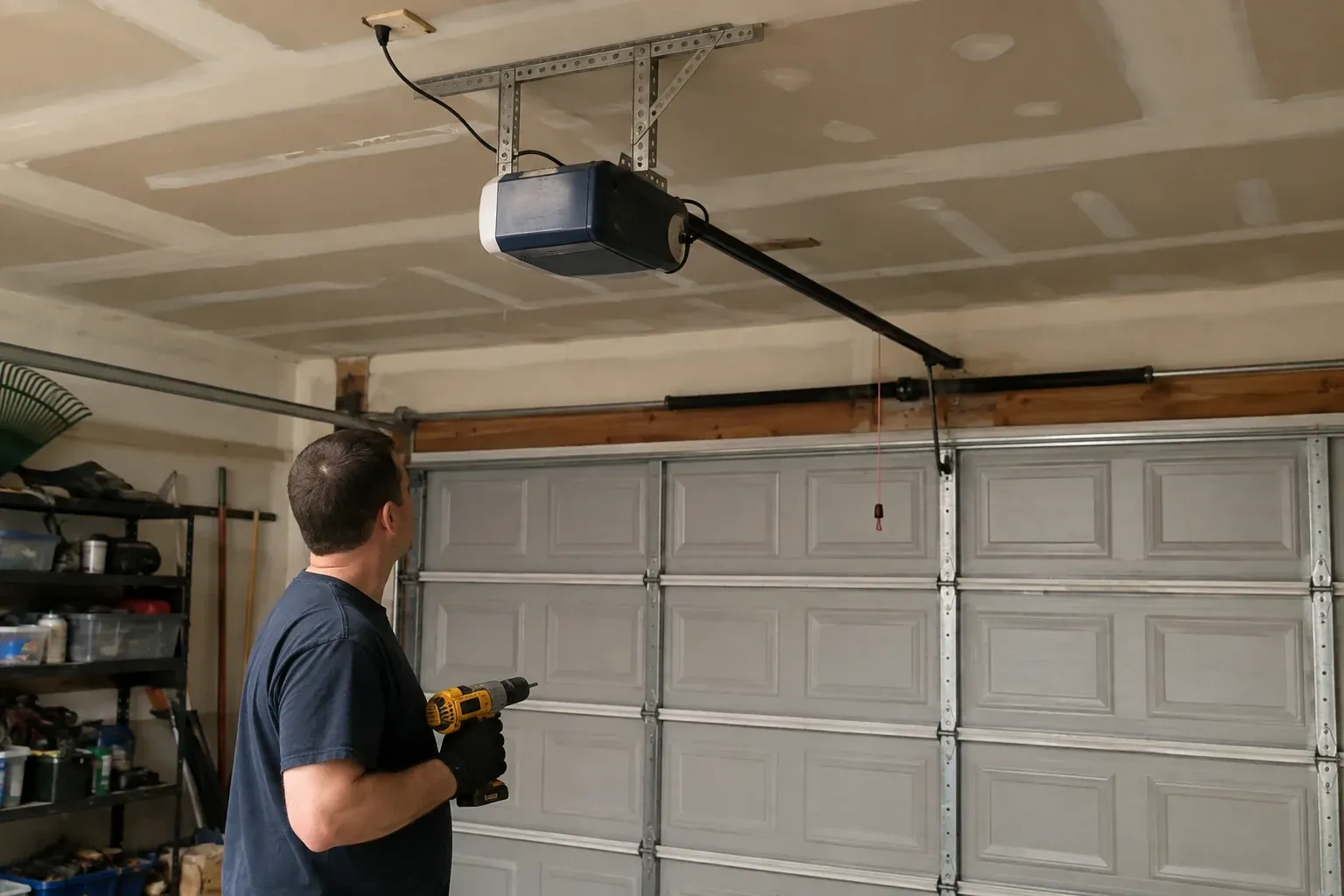
We bring the springs, cables, rollers, hinges and sensors that most doors need, so a repair is finished in a single visit whenever possible. When a part has to be ordered, we make the door safe to use and tell you the plan.
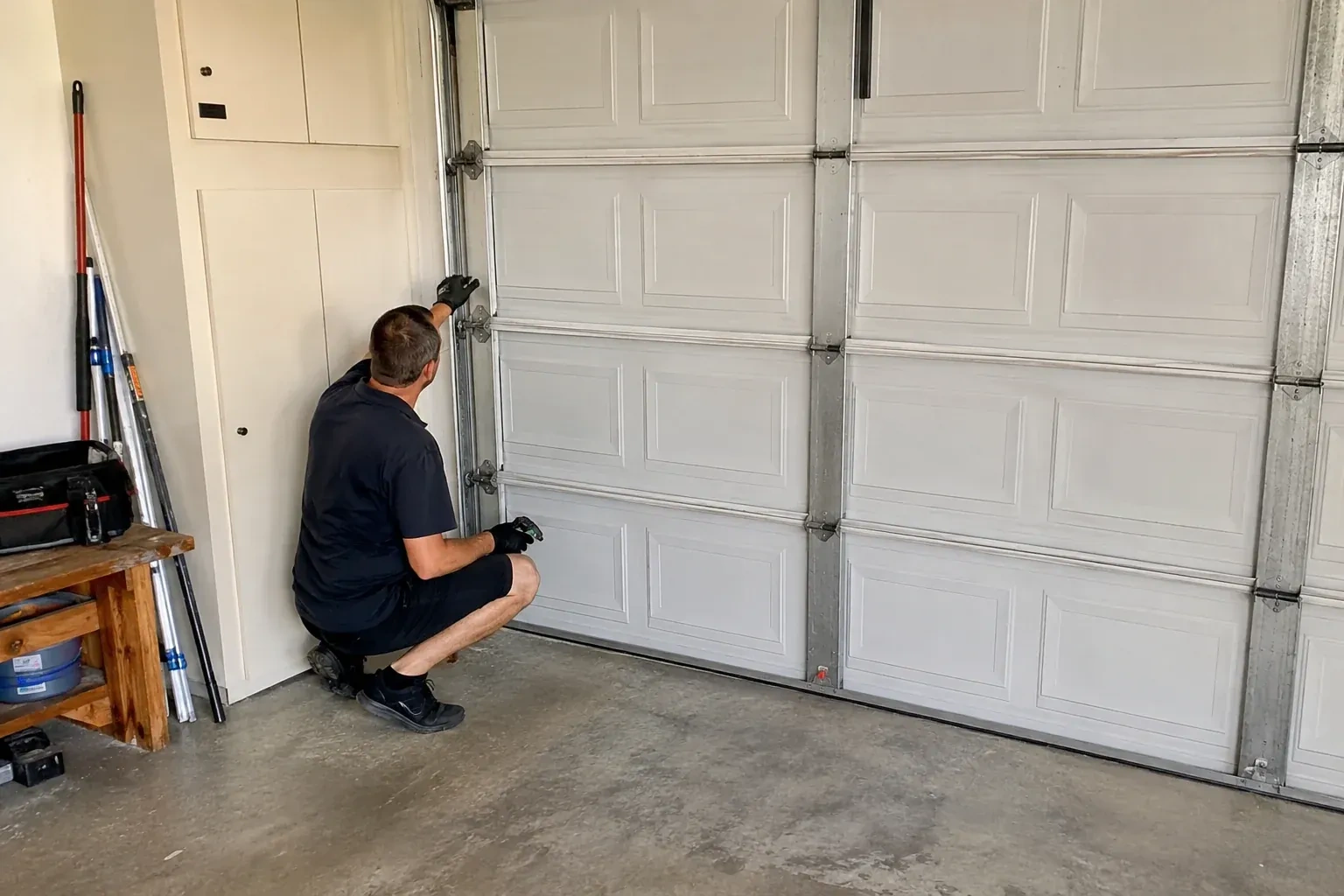
We treat your garage as part of your home. Drop cloths go down before old springs come off, tools stay in one area, and every bit of old hardware, packaging and metal filings leaves with us. Your car goes back in when we are finished and the only trace we leave is a door that works.
Understanding first. We explain the fault in plain terms and check that it makes sense to you before moving on to the repair.
Respect for the space. Drop sheets, careful handling of stored items, and a full clean-up. We are guests in your garage and act like it.
Choices laid out plainly. Each option comes with what it involves, how long it tends to last and what it means for the opener and the rest of the door.
Open 24/7, same fees any hour. Talk to a technician
Below is everything we do to garage doors, from the smallest adjustment to a complete replacement. If your problem is not obvious, start with a diagnosis visit; the fault is often in a part you would not have guessed.
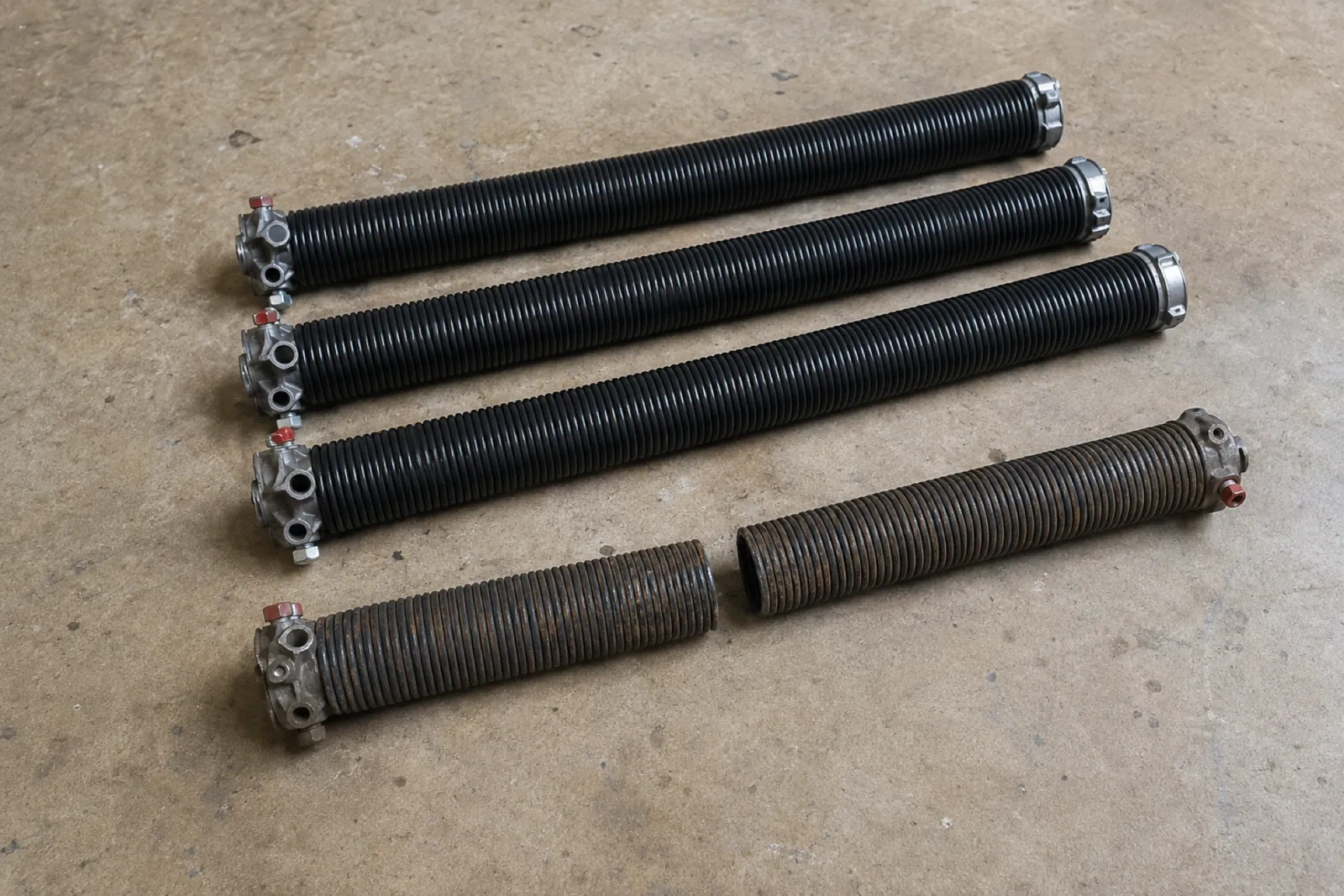
Springs & HardwareWinding a torsion spring is not a job for a ladder and a screwdriver.
Springs & Hardware
Winding a torsion spring is not a job for a ladder and a screwdriver.
The largest moving part of your home. Worth a closer look.
A garage door belongs to the architecture. Its movement belongs to your everyday life. We bring both into the conversation.
Job sheet1 of 3
Off-Track Garage Door Reset
The call
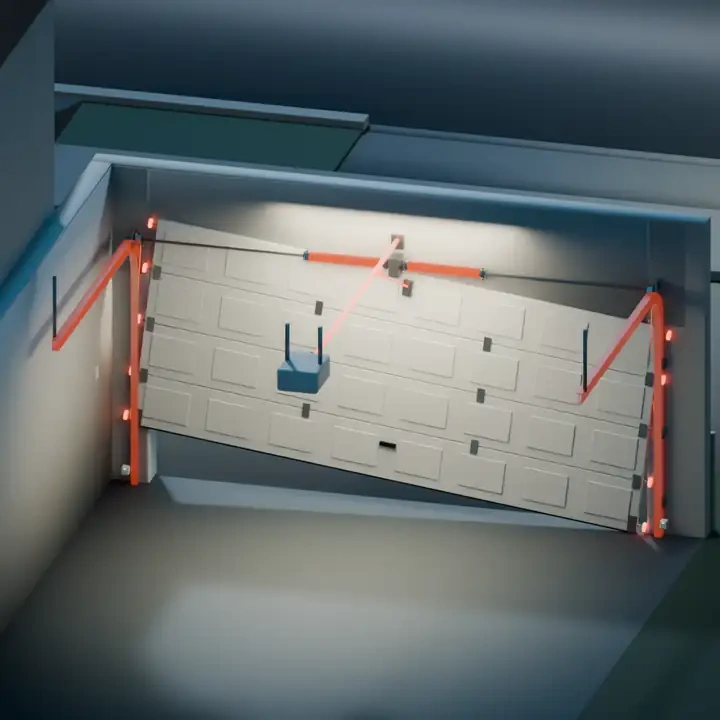
There was a loud bang from the garage, then silence. The door is jammed a third of the way open, wedged at an angle in the tracks, and the opener light is blinking while the trolley slides uselessly along the rail.
Standing inside with the door closed, you notice the cable on the right side near the floor has gone fuzzy. A handful of broken wires stick out like a bottle brush and the steel underneath is brown.
You moved in a few months ago and have no idea when the garage door was last looked at. The previous owners left the remotes on the counter and no paperwork, and the door works, but it works loudly and unevenly.
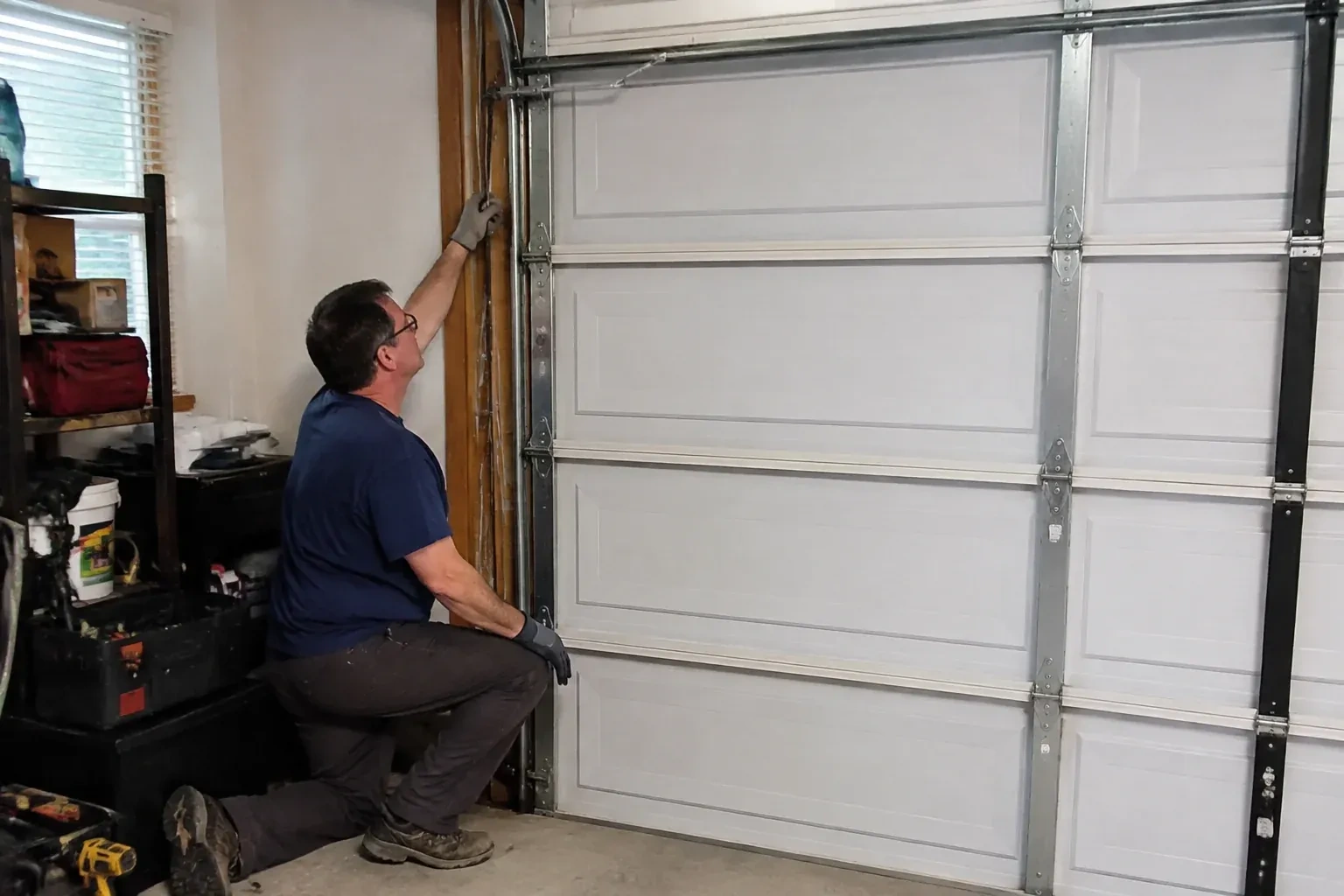
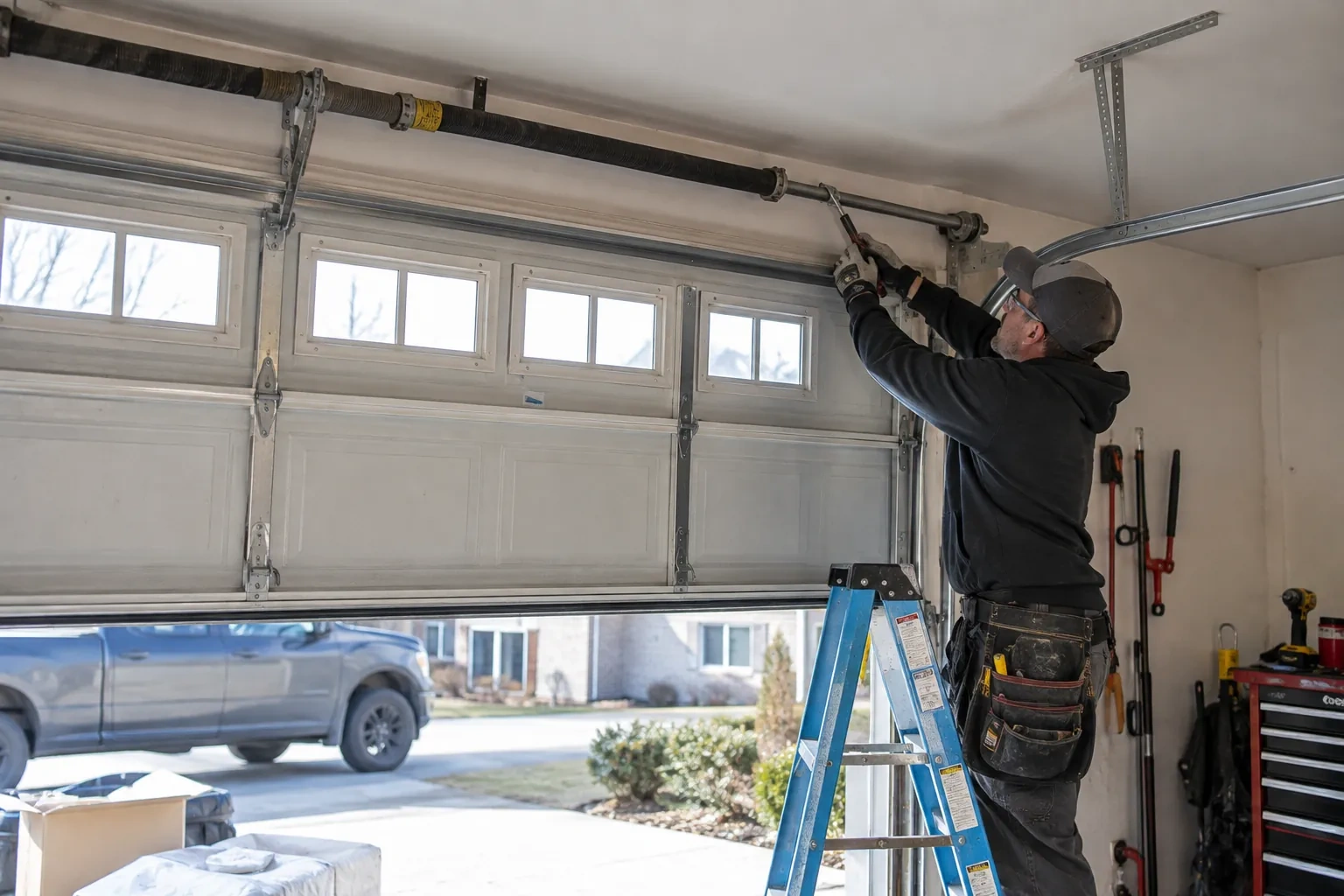
Winding a torsion spring is not a job for a ladder and a screwdriver. It takes proper bars, a secured door and a technician who knows how many turns the door wants. That is the work described in this group.
The top section has developed a bend where the opener arm pulls on it. On the way up it flexes visibly, the door hesitates near the top of its travel, and daylight shows through the joint below it when the door is closed.
The door drops the last stretch to the floor rather than settling, and when you stop it halfway by hand it slides down instead of staying put. Balance has drifted, and the spring is no longer holding its share of the weight.
The door went up as usual this morning, then stopped a third of the way with one corner higher than the other. It is wedged at an angle in the opening, the opener is humming, and nothing you press will move it.
Every morning the door announces itself: a rattle on the way up, a grinding squeal on the way down, loud enough that the neighbours know when you leave. A spray of lubricant settled it for a day or two, then the racket came back.
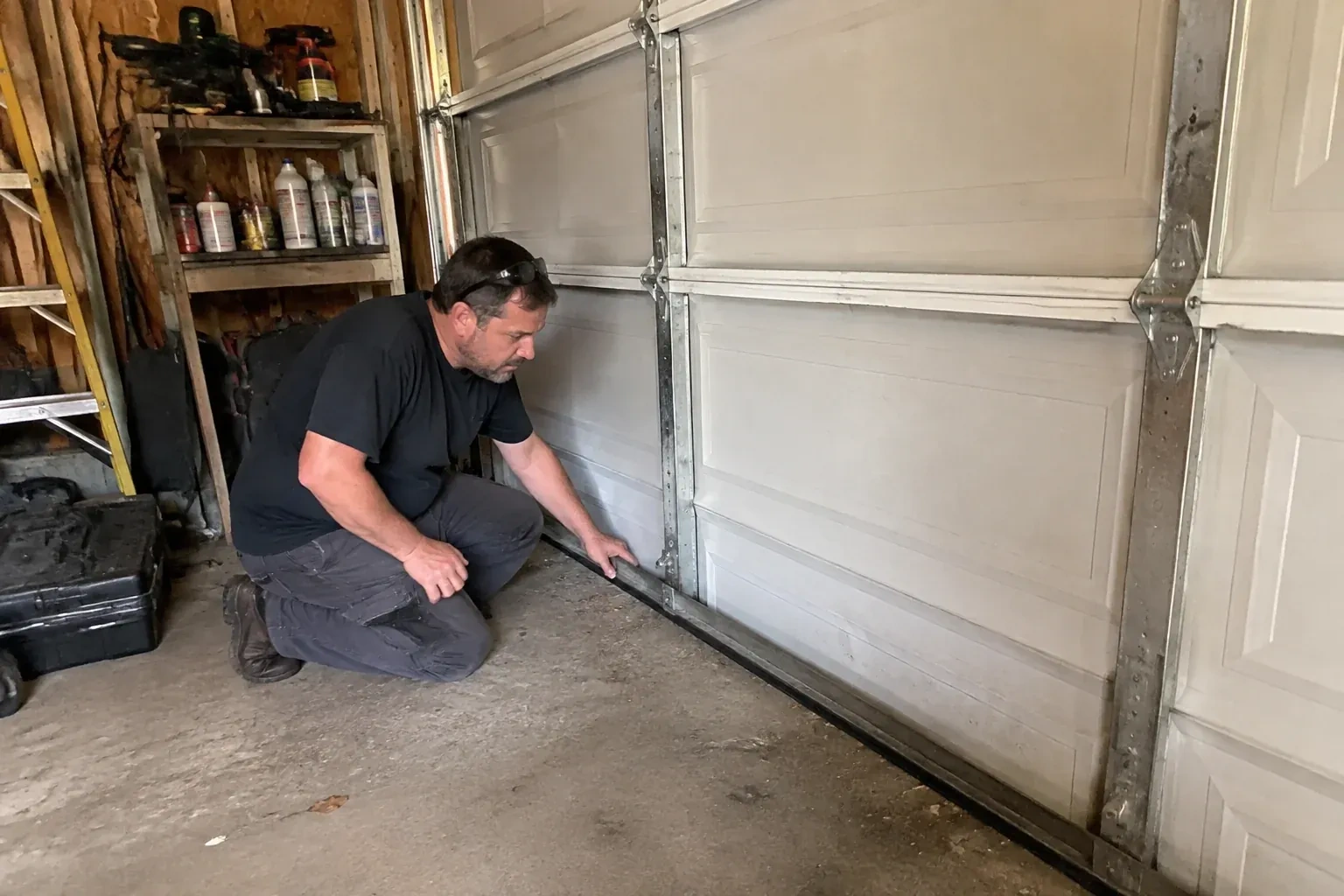
It is a January morning and the door lifts about a hand's width, groans, and settles back down. When you pull the release and try by hand the door feels far heavier than it used to, and the bottom seal is stuck hard to the slab.
Garage Door Safety Inspection. It has been a hard winter.
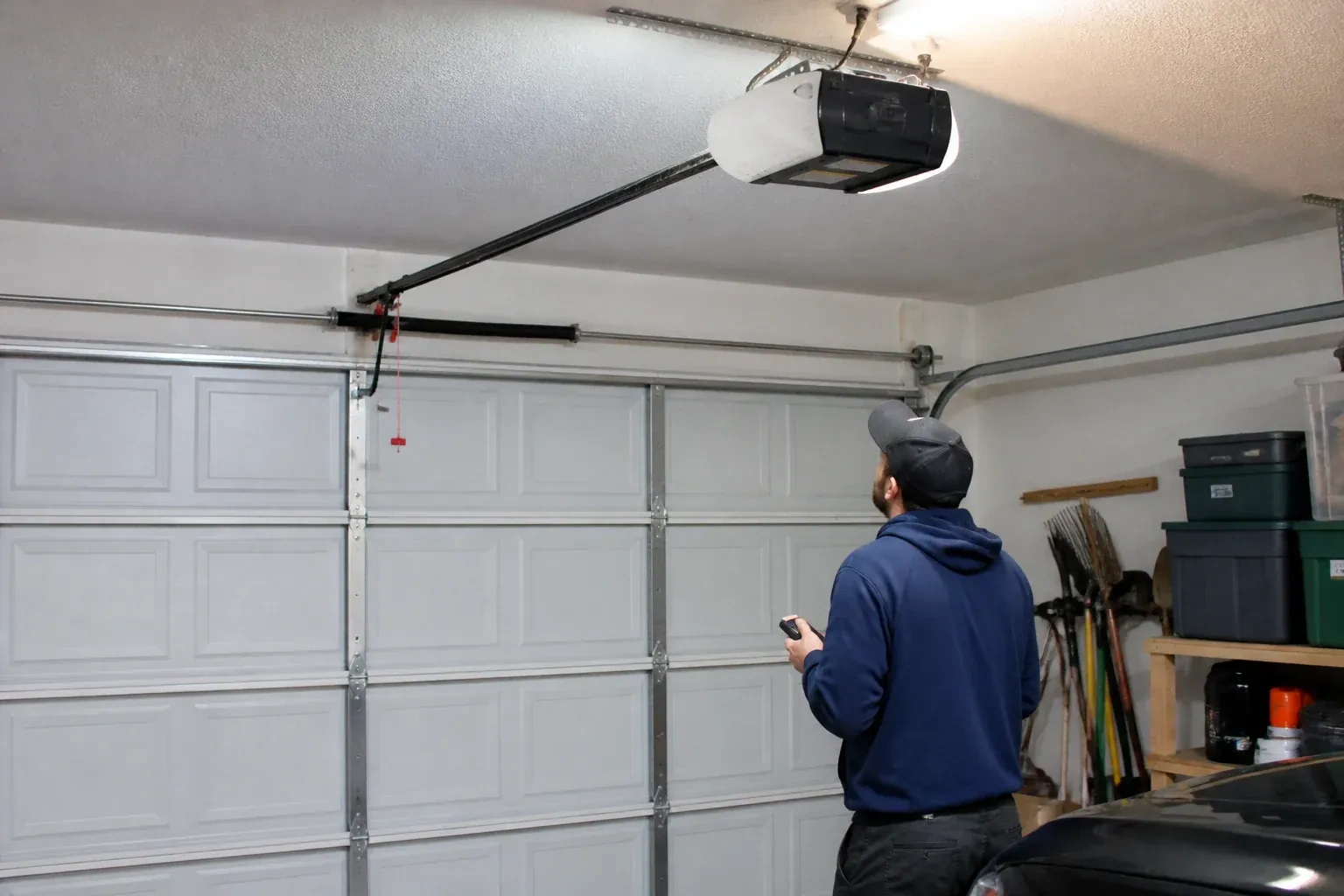
When an opener has failed for the second or third time on the same part, the sensible conversation is about replacement. We lay out what a new unit would do differently and let you decide with the facts in hand.
Windows in a garage door bring daylight into a space that is often dark. Adding glazed sections to an existing door, or choosing a full-view glass door for a workshop or studio, is part of what we do here.
We treat your garage as part of your home. Drop cloths go down before old springs come off, tools stay in one area, and every bit of old hardware, packaging and metal filings leaves with us.
Scene 1 of 5
Call and describe the door
On our way
Understanding first
Respect for the space
Choices laid out plainly
Step 1 of 5
Call and describe the door
Describe the property, the hardware and what has changed, and the visit starts from what you have seen.
Step 2 of 5
On our way
Call or write with what you noticed. We will tell you what it likely means and what the visit will involve, so there are no surprises.
Step 3 of 5
Understanding first
We explain the fault in plain terms and check that it makes sense to you before moving on to the repair.
Step 4 of 5
Respect for the space
Drop sheets, careful handling of stored items, and a full clean-up. We are guests in your garage and act like it.
Step 5 of 5
Choices laid out plainly
Each option comes with what it involves, how long it tends to last and what it means for the opener and the rest of the door.
About 61% of homes in Hamilton were built in 1980 or earlier, according to the 2021 Census.Extension springs are common on older doors, and they should carry a safety cable through the middle so a broken spring is held rather than flung. Adding those cables is a small job the technician checks for and offers on any older door he services.
Single-detached houses make up about 56% of homes in Hamilton (2021 Census).A blend of housing means a blend of garages: spacious attached garages with full headroom on the detached lots, and tight tandem garages with little side room in the attached units. Openers, tracks and springs are all sized at the door rather than assumed from the street.
Mount Nemo Door Specialists(289) 203-0726 · open 24/7
Why will the door close only while I hold the wall button?
That is a built-in behaviour, not a new fault. When the sensor circuit reports a problem, most openers refuse to close from a remote but allow a constant-pressure close from the wall control, because someone standing there can see the doorway. It is a strong signal that the photo eyes or their wiring need attention, and once the sensor issue is corrected the door closes normally from every control again.
Why does my garage door open by itself?
A door that opens with nobody pressing anything is usually being told to by a fault in its wiring or a control. A pinched or stapled wire to the wall control can short intermittently and act like a button press; a stuck button on a remote left in a coat pocket does the same; and a neighbour's remote on an old fixed-code opener can occasionally trigger it. The technician isolates each control in turn until the phantom command stops.
The wall button works but none of my remotes do. What happened?
Three things account for most of these. The wall control has been put into lock mode, sometimes by a child or a visitor, which blocks all remotes until it is released. The opener's memory was cleared, usually by someone pressing the learn button while trying to program a new remote, so every remote needs programming again. Or the receiver in the head unit has failed. The first two are simple settings; the third is a part.
Can I keep using the opener until the technician arrives?
The kindest thing for the door is to leave it where it is and use another entrance. An opener is designed to move a door the springs have already made light; asking it to lift a full-weight door strains the trolley and gear drive and can crease the top section. Keeping the door still and clear of people until the spring is replaced protects the rest of the system from extra repairs.