Sound familiar?Hamilton
- The call
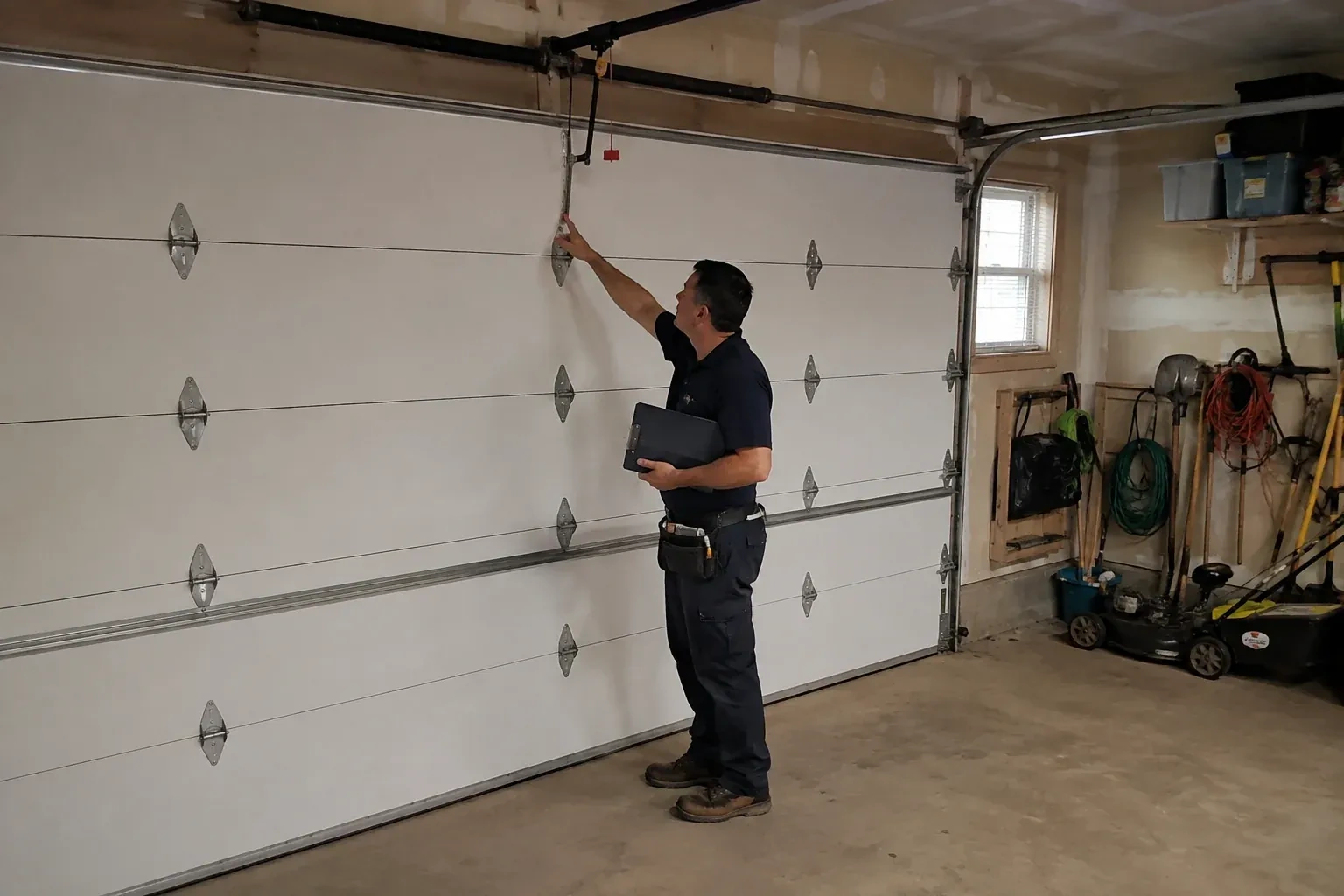
- You moved in three months ago. The door works, but nobody can say how old the springs are, when anyone last looked at it, or whether the little sensors by the floor have ever been tested.
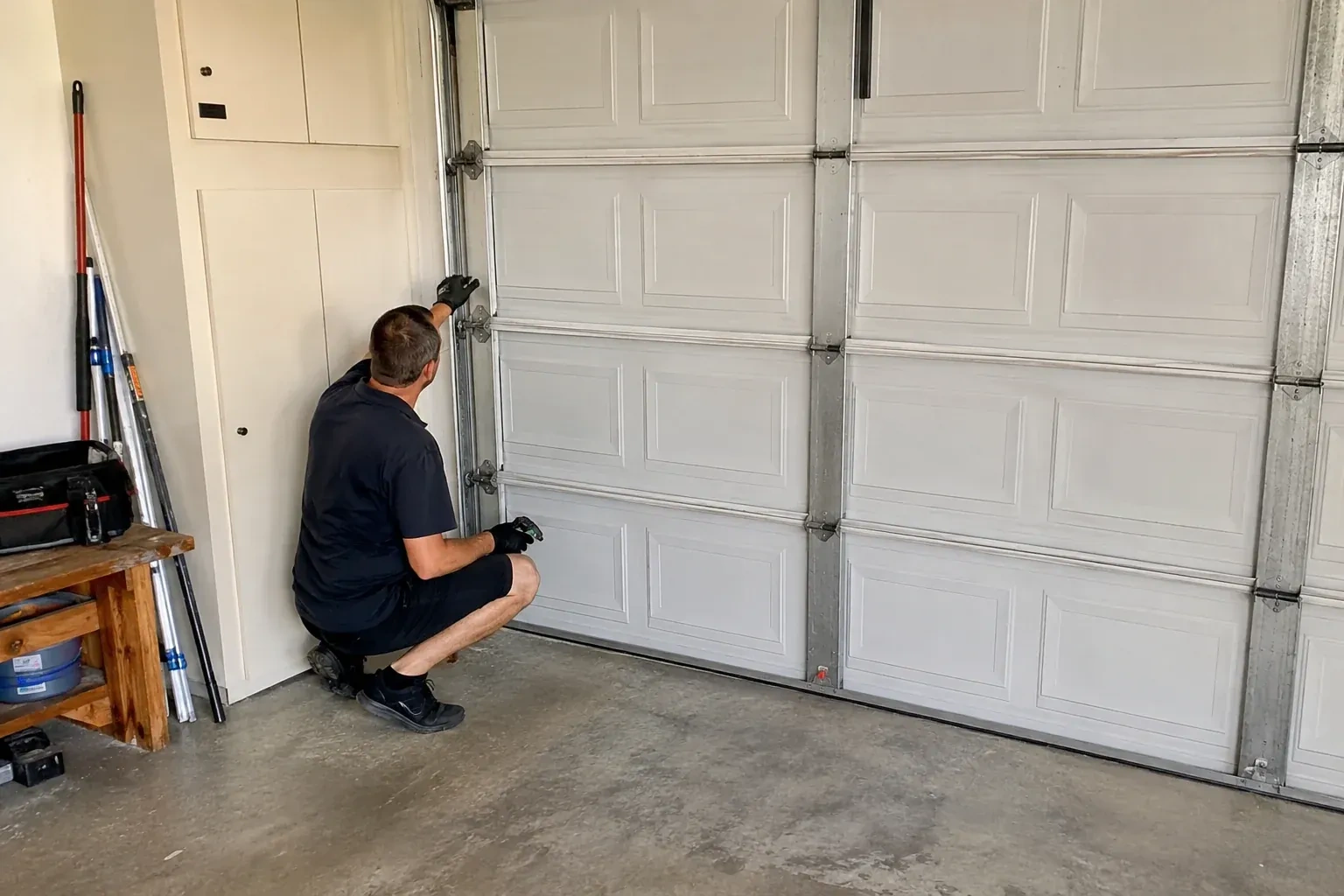
It has been a hard winter. The bottom seal froze to the slab twice, the opener groaned each morning, and one afternoon you noticed a cable on the left side hanging with a little slack in it.
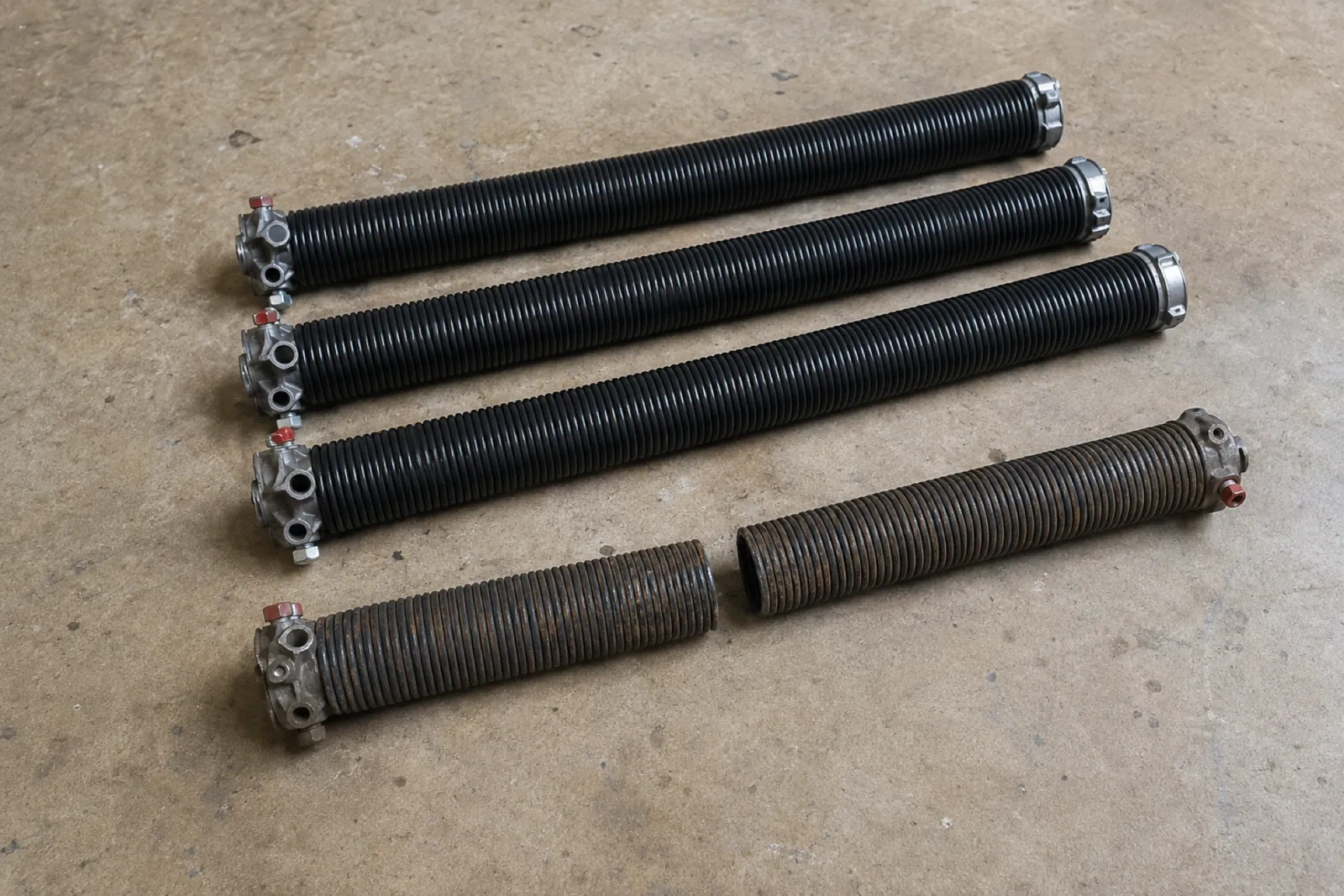
An inspection separates looking from fixing on purpose. Springs, cables, drums and bottom brackets hold the door's weight as stored tension, so the technician examines them closely, measures what can be measured and photographs what matters, without loosening or winding anything. Once the findings are written down, any adjustment or repair becomes its own planned job, done with the door secured and the stored spring tension controlled by whichever method that system calls for. This order protects the hardware as much as the people around it, and it means the report describes the door as it actually is rather than as it was left after a hurried tweak.
Sound familiar?Hamilton
Garage Door Safety Inspection · Hamilton
Scene 1
When a vehicle or something heavy has struck the door, the technician starts at the mark and works outward along the force's path. A dented bottom section can push a roller sideways in its track, bend the track itself where the roller was, shift a bottom bracket and change how that cable sits on its drum. The hinges beside the impact are checked for splits and the strut for a kink. The door is then observed through a cycle to see whether it now twists or hesitates at the point of damage. The finding is written up as cosmetic, hardware repair, section replacement or a counterbalance that needs resetting, so you can decide with the whole picture in view.
Scene 2
The photo eyes are the pair of small sensors low on each track that watch the opening with an invisible beam. The technician confirms they are mounted at the height the opener maker specifies, aligned so the indicator lights hold steady, clean of grime and frost, and wired securely. Then, with the door closing, the beam is broken with an object; the door should reverse before it reaches anything. A sensor that has been knocked out of line, wired loosely or blinded by low sun explains a great many doors that refuse to close on some afternoons, and the fix is often alignment and a wipe of the lens, done on the spot.
Scene 3
The most useful thing about a first inspection is the second one. With the model numbers, spring dimensions, cable condition, seal gaps and photo-eye heights on record, the next technician can measure the same points and tell you what has moved rather than starting from nothing. For most households an annual visit fits, with a look in early spring after the salt season a natural choice. A door that carries a lot of traffic, an older door, or one in a rental where nobody watches it closely may suit a check each season. Whatever the interval, the report you are holding is the reference the next one will be read against.
What shapes the quoteMount Nemo Door Specialists
FeesSame any hour
Most often it is the photo eyes. A sensor knocked slightly out of line, a lens with a film of road grime, a loose wire, or low afternoon sun shining straight into one eye will each break the beam as far as the opener is concerned. The next candidates are a down-force setting that has drifted, a binding roller or a door that has gone out of balance. The inspection checks each in turn.
The date, the door and opener model numbers, the spring type and dimensions, and a line for each component with its condition. Findings are sorted into in good order, maintenance done, planned repair and stop-use. Measurements such as seal gaps, track spacing and photo-eye height are recorded, and photographs of anything worth showing are attached. It is written so a future technician can quote from it and a future inspection can compare against it.
The route is the same and the counterbalance looks different. Extension springs stretch beside the horizontal tracks and pull through pulleys, so the technician examines each spring for stretch and a broken end, each pulley for a grooved wheel or a seized bearing, the cable clips, and whether a containment cable runs through the centre of each spring. Balance, reversal and photo-eye tests are unchanged.
HamiltonOntario
Garage Door Safety Inspection · Buchanan, Central, Chedoke Park, Cootes Paradise, Corktown, Hamilton Beach, Hopkins Court, Hopkins Survey, McDonald Court, North End, University Gardens, Waterdown, West Hamilton, Westdale, Pleasant View Survey
Every square is one home in a hundred.
On-site assessment preferred · (289) 203-0726, open 24/7