Skip to content
MountNemo Door SpecialistsOpen 24/7 (289) 203-0726
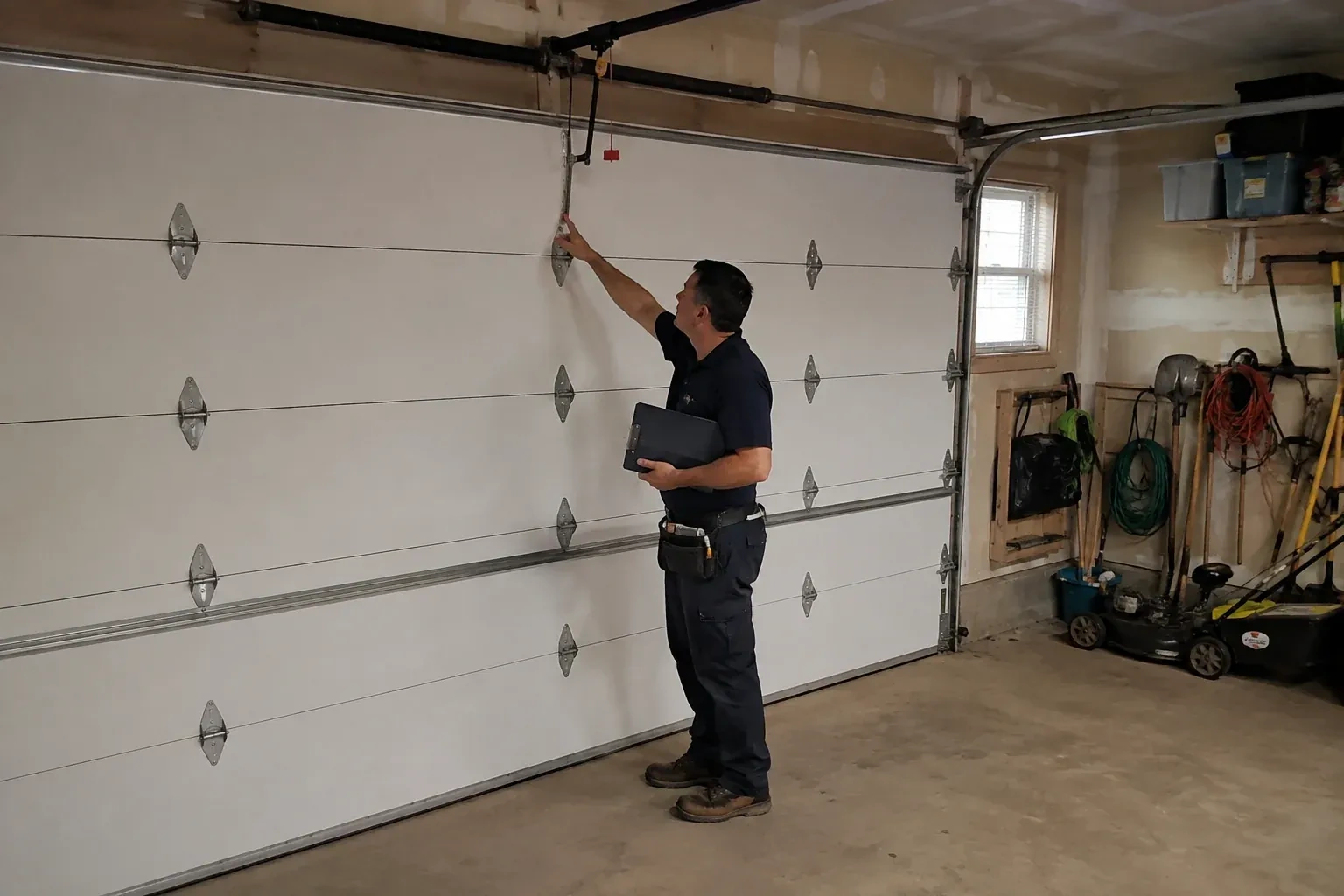
A person holding a clipboard examines the interior hardware of a closed garage door. — Garage Door Tune-Up, McDonald Court

Repairs · McDonald Court

Garage Door Tune-Up

Since the first cold snap the door has been sluggish. It climbs slowly, hesitates near the top and the opener motor sounds strained.

In plain words

The visit follows a set order. First the technician watches a full cycle, up and down, from a safe distance, noting where the noise, shaking or hesitation lives. Then the door is closed and inspected hardware by hardware, from the bottom brackets to the torsion shaft. The manual release is pulled and the door is lifted by hand to feel the balance. Only then does the work start: fasteners, lubrication, opener adjustments and sensor alignment. A second cycle and the reversal tests close the visit, and the difference between the first run and the last is the measure of the tune-up.

Sound familiar?McDonald Court

The call
Since the first cold snap the door has been sluggish. It climbs slowly, hesitates near the top and the opener motor sounds strained. On the coldest mornings it opens a hand's width, thinks about it, and comes back down.
NextHow the visit goes

Garage Door Tune-Up · McDonald Court

How the visit goes

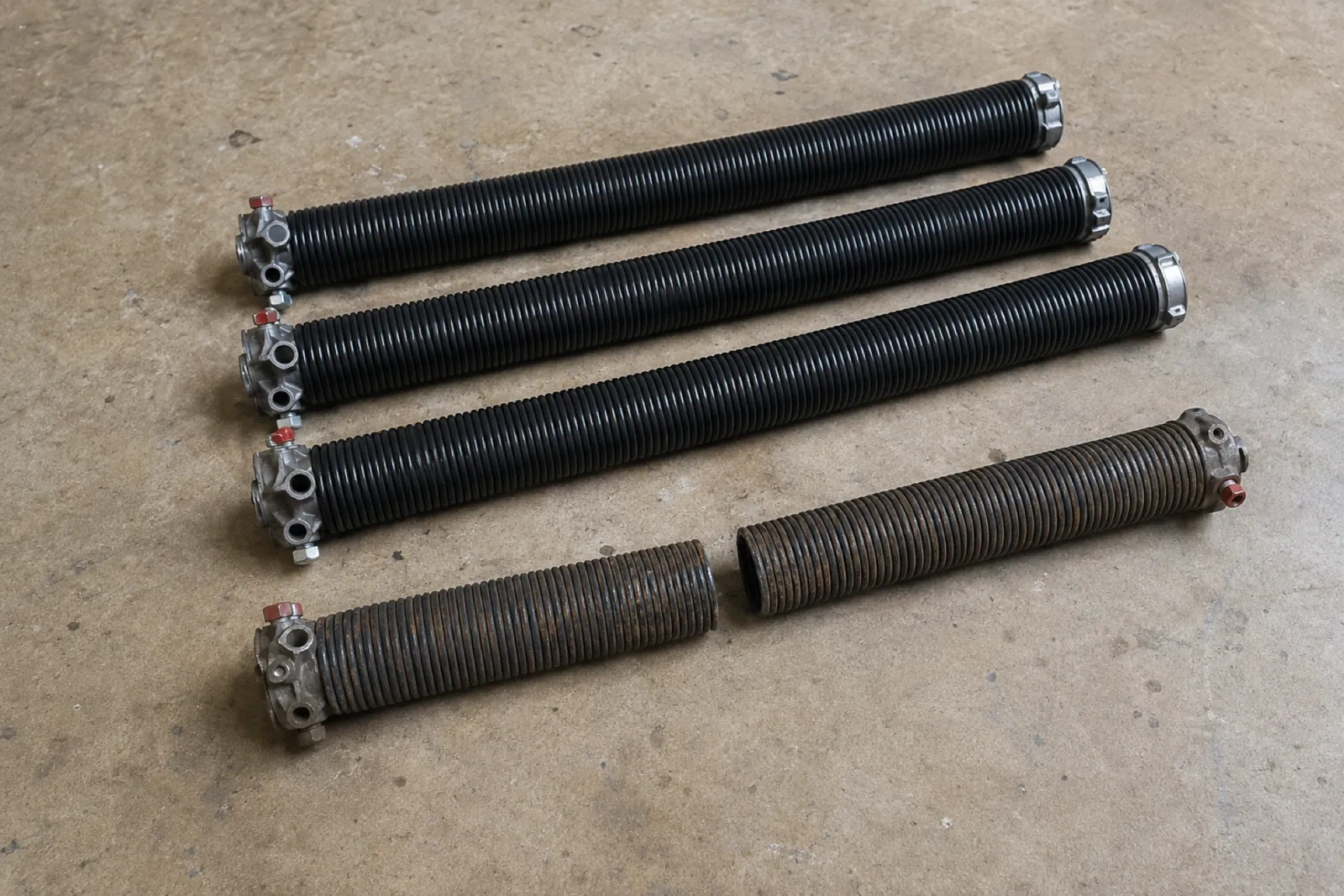
Four long coiled garage-door springs on a concrete floor, three black with metal end cones and one rusty spring broken in two. — McDonald Court
  1. Scene 1

    Rollers in their track

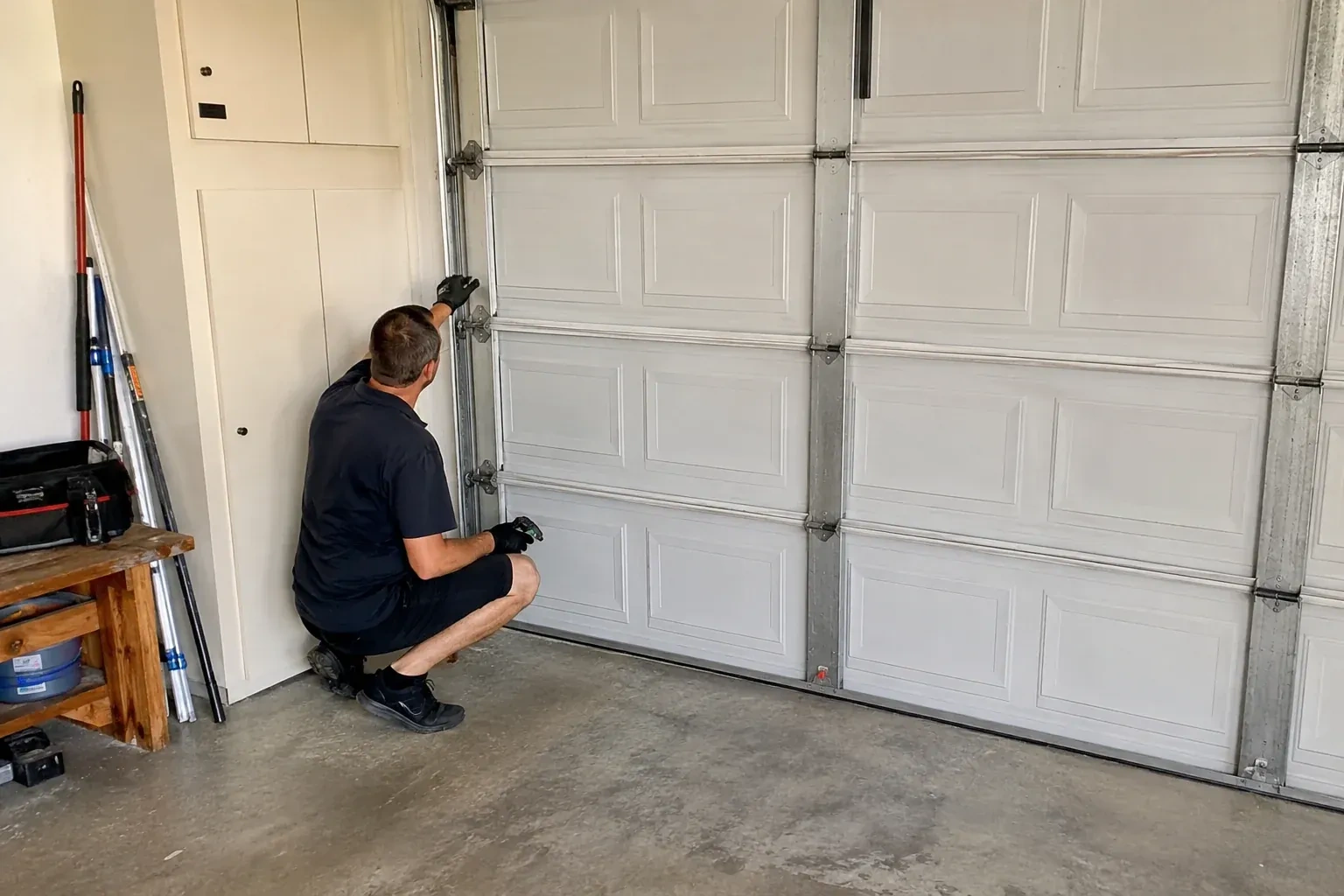
    Rollers and track are read together. The technician looks at the wear pattern on the rollers, checks whether steel rollers have gone out of round and whether nylon ones are chipped, and confirms that each roller sits fully in the track with its stem seated in the hinge. The vertical tracks are checked for plumb and for the small gap that should exist between the roller and the track wall, since a track that has been pulled tight against the door makes the rollers drag. The curved and horizontal sections are inspected for dents, loose hangers and the grit that accumulates at the bend. A clean, straight track with rolling rollers is what a smooth door is made of.

  2. Scene 2

    Rollers and hinges that have earned attention

    Sometimes the inspection finds a roller with a flat spot, a bearing that grinds even when lubricated, or a hinge with a cracked knuckle, and these are the small parts that make a door loud and rough. Where the customer agrees, a worn roller or hinge on the middle sections can be changed during the visit: the door is clamped to the track so it cannot move, the hinge is unbolted, the roller stem is drawn out and the new part goes in with fresh fasteners. Rollers at the bottom section stay with the tension-bearing hardware and are handled separately. Even a single replaced roller can remove the loudest sound in the cycle.

  3. Scene 3

    When to book the next one

    How soon the door wants another visit depends on how hard it works. A door that cycles a few times a day, in an attached garage that sees salt, snow and meltwater every winter, does well with a tune-up once a year, usually in the fall before the cold arrives. A lightly used door in a detached garage can often go longer, with the monthly reversal tests and a little lubricant from you in between. The written record is your guide: if it lists parts to watch, the next visit checks those first; if everything was healthy, the interval can stretch. The technician will suggest a timing that fits your door rather than a blanket schedule.

In the van

  • Photo-eye brackets and wire
  • Bottom seal (astragal)
  • Locking pliers or C-clamps
  • Silicone or lithium garage door lubricant
  • Replacement steel or nylon rollers

What shapes the quoteMount Nemo Door Specialists

Balance findings
If the balance test shows the springs have lost tension, spring adjustment or replacement is a separate job with its own quote rather than part of the maintenance visit.
Photo-eye and wiring work
Cleaning and realigning sensors is routine. A bent bracket, a chafed wire or a sensor that has failed means a part or a rewire, which is named separately.
Season and weather
A winter visit can include freeing a seal frozen to the slab and working with thickened lubricant before the tune-up proper can begin, which adds time to the visit.

FeesSame any hour

Have it ready

Before you call · 0 / 3

(289) 203-0726

Answers in plain language

Why does my door struggle in cold weather?

Cold affects several things at once. Old lubricant thickens into a drag on every hinge and bearing. Steel contracts slightly, so a track that was snug becomes tight. Rubber seals stiffen and the bottom seal can freeze to the slab. The opener then reads all this extra resistance as an obstruction and stops or reverses. A fall tune-up with a low-temperature lubricant, silicone on the seals and correctly set force goes a long way toward smooth winter mornings.

Do you adjust the springs during a tune-up?

Springs are inspected and lubricated during a tune-up, and the balance test tells us whether they are carrying the door's weight properly. Changing their tension is a separate, deliberate job: the door is clamped to the track, winding bars are used on a torsion spring, and the technician works from a stable position. If the balance check shows the springs need adjustment or replacement, you receive that as its own recommendation with its own quote.

The sensor light is blinking. What does that mean?

On most openers a steady light on each photo-eye means the pair are aligned and seeing each other, and a blinking light means the beam is interrupted or the sensors are out of line. Common causes are a bracket nudged by a bin or a tire, dust or salt film on a lens, low sun at a certain hour, or a chafed wire. During a tune-up the lenses are cleaned, the brackets straightened, the pair realigned and the wiring checked back to the opener.

McDonald Courtinformation

HamiltonOntario

Town
McDonald Court, Hamilton
In business
12 years
Hours
Open 24/7
Nights, weekends and holidays, same fees
Visits
On-site assessment preferred. Request a visit or call.

2021 census: what it means at the door

Every square is one home in a hundred.

  • 61 in 100 homes · older homes
  • About 61% of homes in Hamilton were built in 1980 or earlier, according to the 2021 Census.Older garages tend to have lower headroom and narrower single openings, so replacement doors and openers are chosen to fit the space rather than the other way round. Measuring the header, side room and ceiling depth is the first step on every one of these visits.
  • Single-detached houses make up about 56% of homes in Hamilton (2021 Census).A neighbourhood with a mix of detached houses and townhouses or condos means a technician moves between a wide family double door and a narrow single in a row within the same afternoon. The van carries hardware for both, and each visit is planned for that door.

Source: Statistics Canada, Census Profile

Open McDonald Court in Google Maps

On-site assessment

Request a visit.

Since the first cold snap the door has been sluggish.

(289) 203-0726, open 24/7.