Skip to content
MountNemo Door SpecialistsOpen 24/7 (289) 203-0726
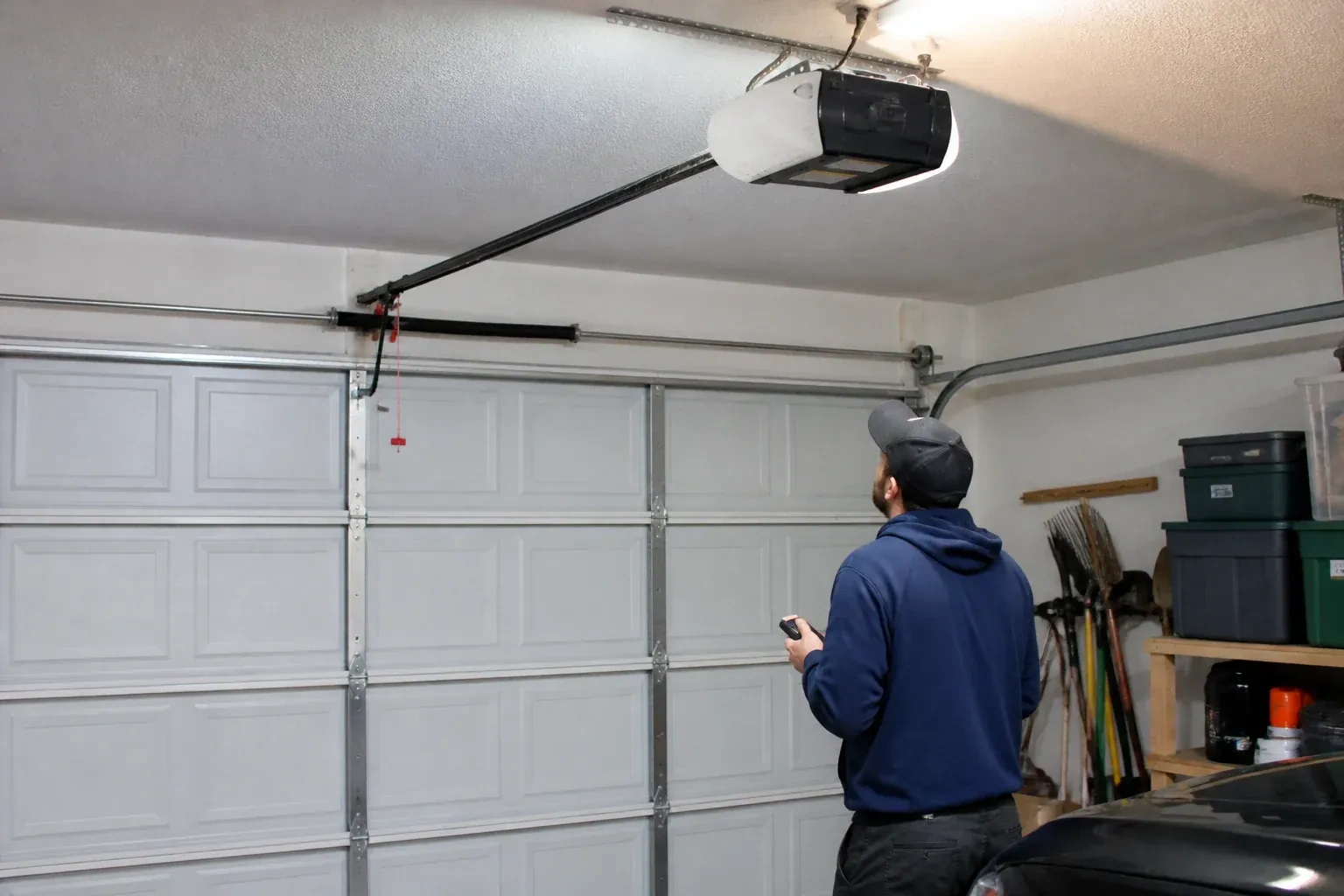
A person holding a remote looks toward an overhead garage-door opener and rail. — Garage Door Opener Diagnosis and Repair, Corktown

Openers · Corktown

Garage Door Opener Diagnosis and Repair

It is a January morning and the door lifts about a hand's width, groans, and settles back down. When you pull the release and try by hand the door feels far heavier than it used to, and the bottom seal is stuck hard to the slab.

In plain words

An opener is only half of the machine. The other half is the door: springs balanced so the door weighs almost nothing in your hand, rollers turning in a straight track, hinges holding the panels square. When that half slips out of tune, the opener takes the blame for straining, stalling or reversing, and a bigger motor or a higher force setting only hides the fault. A proper diagnosis disconnects the door from the operator and lifts it by hand before anything else. If it floats to shoulder height and stays there, the opener is the patient. If it drops or fights back, the door is.

Sound familiar?Corktown

The call
The door goes up perfectly. Coming down is the trouble: partway to the floor it stops, climbs back to the top, and the light on the opener blinks at you. The only way to close it is to stand inside holding the wall button the whole way down.
NextHow the visit goes

Garage Door Opener Diagnosis and Repair · Corktown

How the visit goes

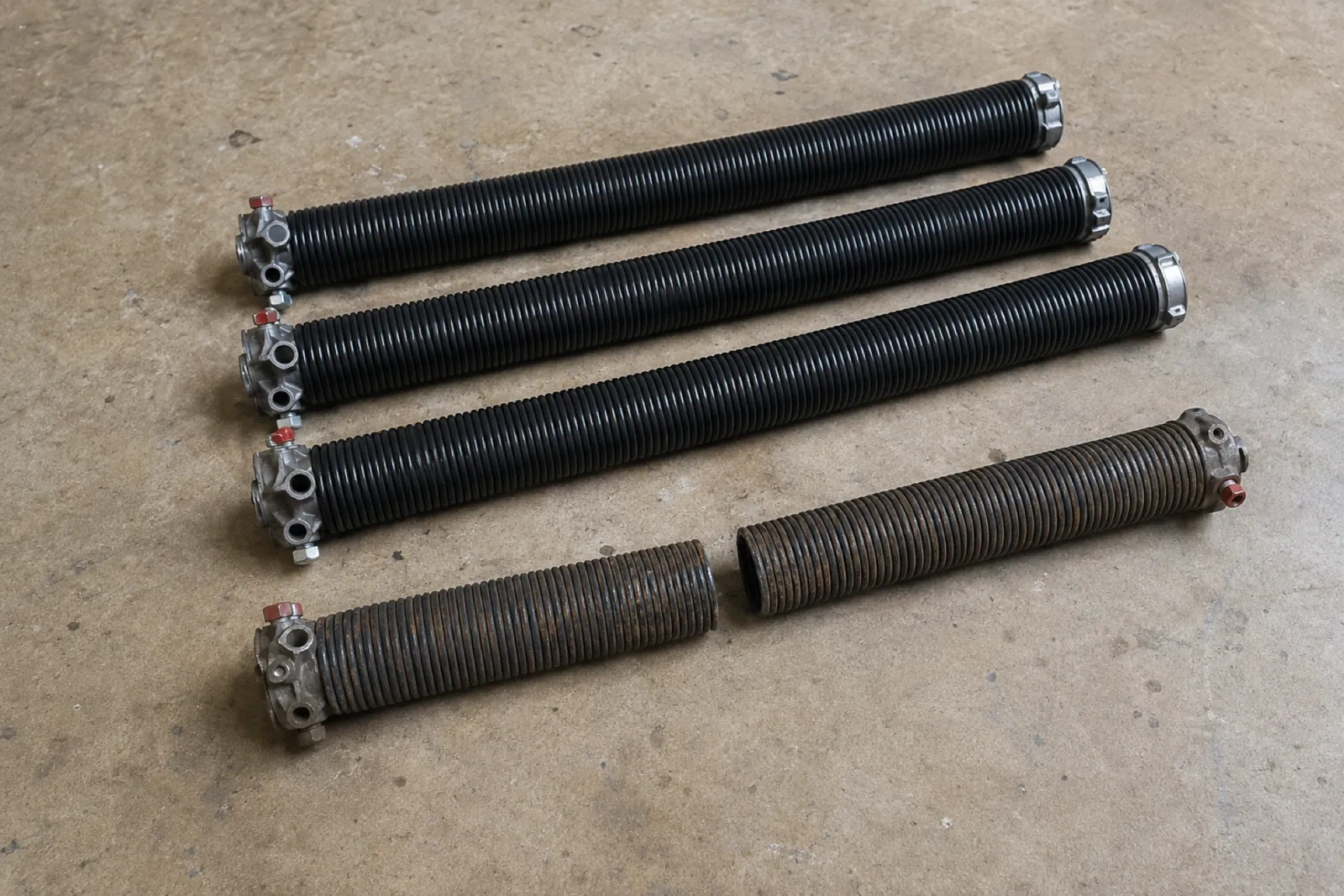
Four long coiled garage-door springs on a concrete floor, three black with metal end cones and one rusty spring broken in two. — Corktown
  1. Scene 1

    What the blinking lights are saying

    Many openers describe their own fault. The head unit flashes its light bulbs, or an up arrow and a down arrow, in a numbered pattern, and some display a code on the wall control. The technician counts the pattern, identifies the exact model from its label, and matches the two on the manufacturer's chart: one family of codes means the sensor circuit is open or obstructed, another means the motor was told to move and nothing turned, another means the door needed more force than the limit allows. The code narrows the search; a hands-on test then confirms it, because a wiring fault can imitate a sensor fault.

  2. Scene 2

    Restoring power the right way

    When the fault is electrical supply, the fix is matched to the cause rather than simply reset. A tripped breaker or ground-fault device is reset and then watched through several cycles to be sure it holds; one that trips again points to a damaged cord, a wet outlet or a failing motor. A blown board fuse or a dead transformer is replaced with the part specified for the model. Surge damage after lightning often shows as a board that lights up but ignores every control, and that board is replaced where the model is still supported. New receptacles or hard wiring are referred to an electrical contractor.

  3. Scene 3

    A clear path if the unit is near its end

    When the diagnosis finds an opener that is safe today but not for long, you leave with a plan rather than a surprise. You know which part is wearing, what the warning signs will be, and how the decision to replace is likely to present itself. If the unit is one the industry recommends replacing, such as a head unit with no photo eyes, that is set out plainly along with what a modern belt or direct-drive unit changes: quieter running, battery backup, soft start and stop, and sensors that meet the current standard. The door is left working and safe while you decide.

In the van

  • Wall control
  • Start capacitor
  • Transformer and board fuse
  • Remote batteries (coin and cylinder cells)
  • Drive gear and sprocket kit

What shapes the quoteMount Nemo Door Specialists

Wiring to be re-run
Damaged low-voltage wire to the sensors or the wall control is replaced along its whole length and clipped clear of the track, so the distance and route from head unit to door frame affect the time.
Which component failed
A capacitor, a sensor pair or a re-engaged trolley sits at one end of the range; a logic board or a motor sits at the other. The diagnosis names the part before the quote is settled.
Season and weather
A frozen seal, a stiff door and an unheated garage in the cold months add steps to a diagnosis, such as freeing the door and re-lubricating for low temperatures, and the quote allows for them.

FeesSame any hour

Have it ready

Before you call · 0 / 3

(289) 203-0726

Answers in plain language

How old is too old to repair?

Age alone is not the test; parts and safety are. The technician checks the exact model and part numbers, because even a unit from the last two decades can have a board, sensor or trolley that is no longer made. Where the parts are available, a repair is usually straightforward. Where a key part is discontinued with nothing to replace it, or the unit predates photo eyes, replacement is the sounder choice even for a small fault. The technician tells you which side of that line your unit sits on.

What should I check before calling?

Look for the simple things: is the opener plugged in and its light working, has the wall control's lock indicator started blinking, does another remote work, is anything sitting in the path of the sensors, and are the little sensor lights steady. Note what the motor does when you press a button. Do not try to lift a door that is stuck if a spring looks broken. Whatever you find, tell the technician; it shortens the diagnosis.

Why does my door go back up when I try to close it?

The opener believes something is in the way. Either the photo-eye beam near the floor was broken, misaligned or blocked, or the door met more resistance than its force setting allows, often from a frozen seal, stiff rollers or a travel limit set slightly too long so the door hits the slab. The indicator light on the head unit usually tells which of the two it was, and the technician confirms it by testing rather than guessing.

Corktowninformation

HamiltonOntario

Town
Corktown, Hamilton
In business
12 years
Hours
Open 24/7
Nights, weekends and holidays, same fees
Visits
On-site assessment preferred. Request a visit or call.

2021 census: what it means at the door

Every square is one home in a hundred.

  • 61 in 100 homes · older homes
  • About 61% of homes in Hamilton were built in 1980 or earlier, according to the 2021 Census.Decades of freeze and thaw work on the concrete apron in front of an older garage, and an uneven floor means the bottom seal meets a gap on one side. A thicker seal or an adjusted threshold closes it and keeps snow and cold air out.
  • Single-detached houses make up about 56% of homes in Hamilton (2021 Census).A mixed neighbourhood is where weatherproofing varies most. A detached garage with an old, uneven apron needs a thicker bottom seal; a newer townhouse door mostly needs a cracked section of seal replaced. We look at how each door meets its floor and fit what closes the gap.

Source: Statistics Canada, Census Profile

Open Corktown in Google Maps

On-site assessment

Request a visit.

It is a January morning and the door lifts about a hand's width, groans, and settles back down.

(289) 203-0726, open 24/7.