Skip to content
MountNemo Door SpecialistsOpen 24/7 (289) 203-0726
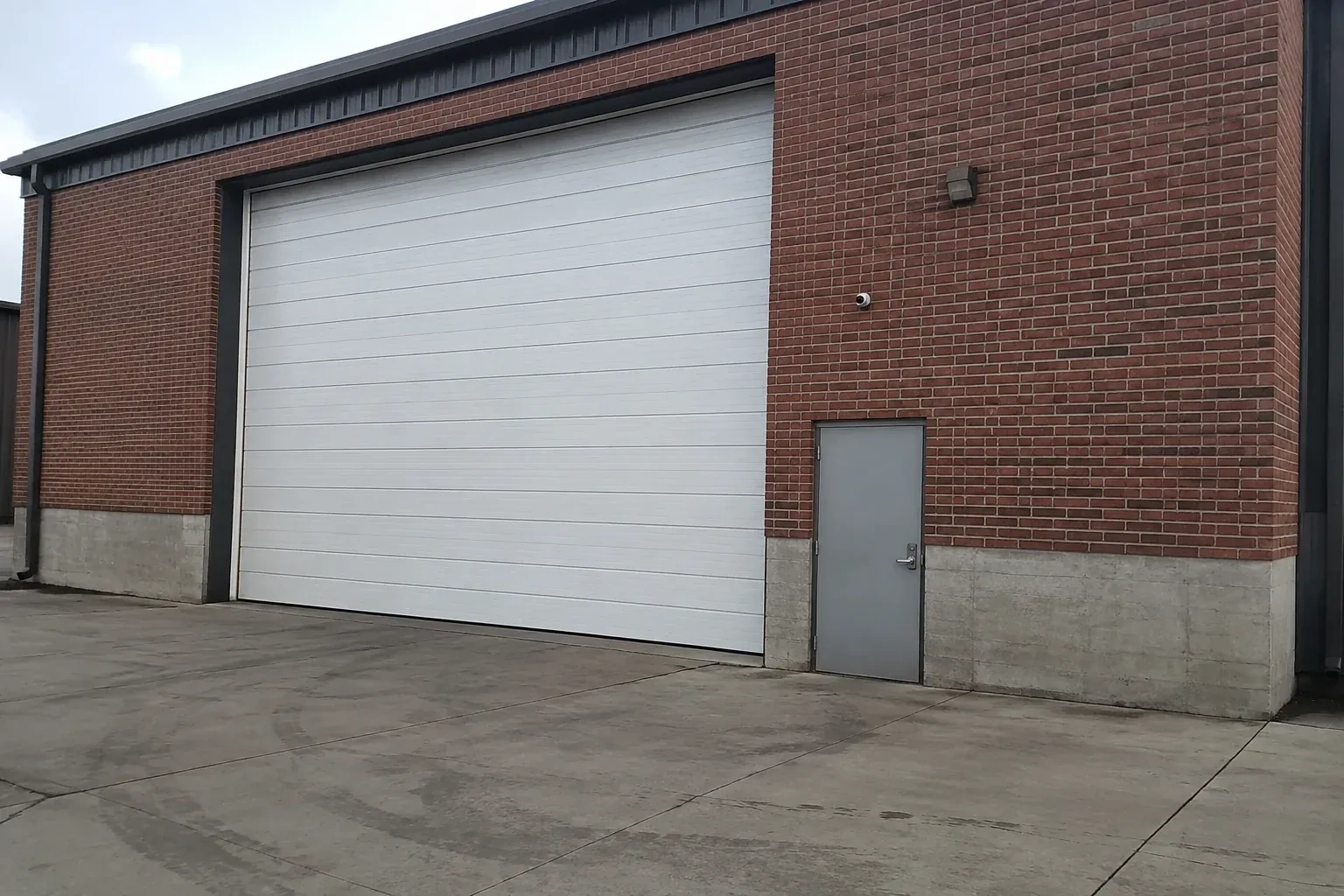
Tall closed sectional loading door beside a personnel door at a brick unit. — Commercial Sectional Door Repair, Central

New Doors · Central

Commercial Sectional Door Repair

Cold weather has exposed a widening gap below the closed door. The bottom retainer is bent, the rubber seal is split, and uneven seating lets drafts and slush enter the work area.

In plain words

A powered door works properly only when its mechanical assembly and operator agree. Repair may involve restoring smooth manual movement first, then checking the drive connection, limits, brake or clutch, control station and entrapment-protection devices. This order keeps an operator adjustment from masking a heavy, binding or unbalanced door. After the underlying hardware moves freely, travel settings are brought back to the actual open and closed positions, sensors are aligned, and the system is tested from each normal control point.

Sound familiar?Central

The call
The operator runs and the drive chain moves, yet the sectional door hesitates near the floor. It feels unusually heavy during manual operation, pointing to a counterbalance problem rather than a simple control-station fault.
NextHow the visit goes

Commercial Sectional Door Repair · Central

How the visit goes

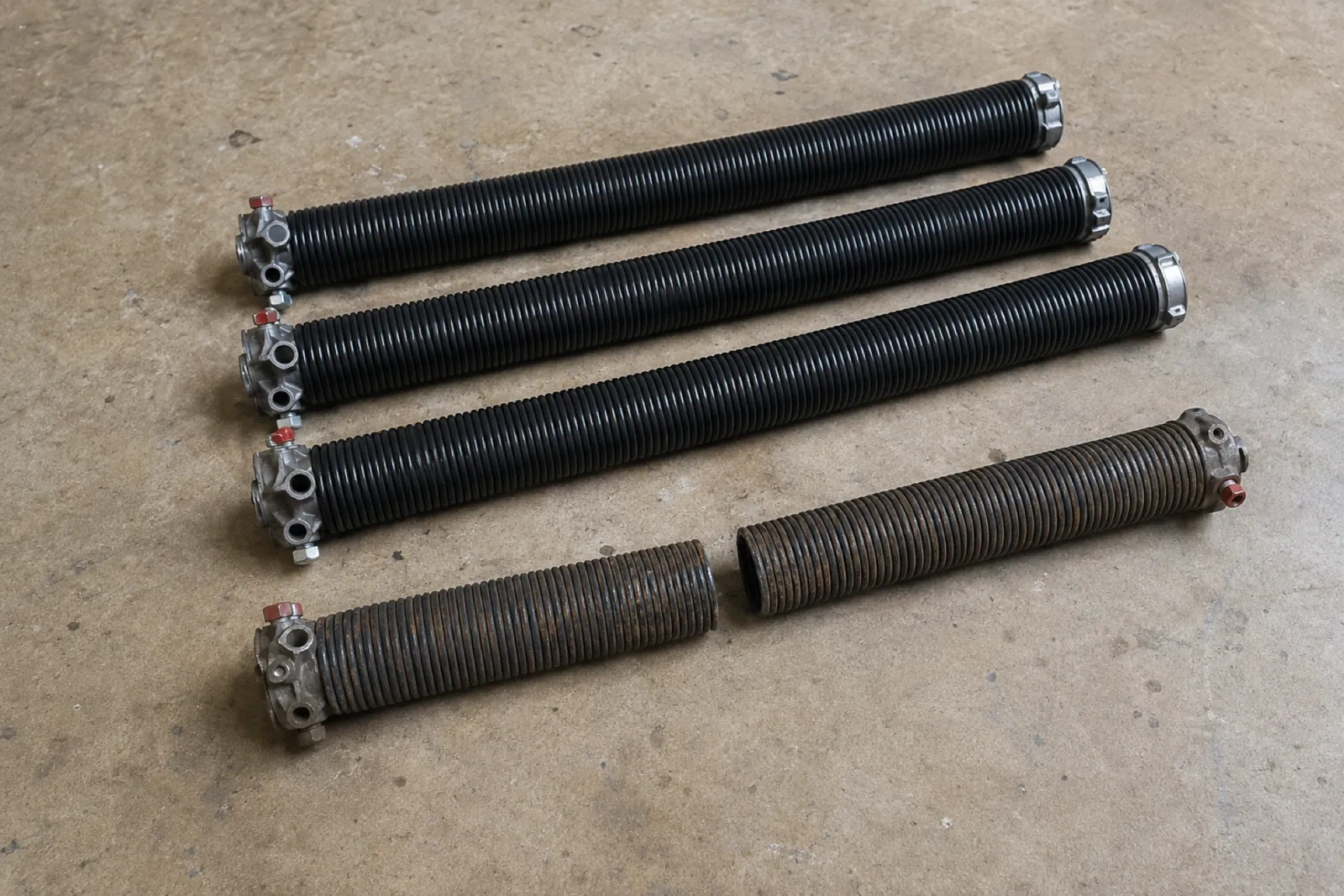
Four long coiled garage-door springs on a concrete floor, three black with metal end cones and one rusty spring broken in two. — Central
  1. Scene 1

    Checking balance before the operator

    When the motor hums, stalls or strains, the door itself is assessed before settings are changed. With the system safely placed for manual evaluation, the technician checks whether the door moves freely and remains controlled through its range. Spring condition, cable wraps, rollers, track obstructions and any active lock are reviewed. Only after the mechanical load is understood does attention move to the drive chain, sprockets, clutch or brake, travel limits and controls. This sequence separates an operator issue from resistance created elsewhere in the assembly.

  2. Scene 2

    Re-establishing the weather seal

    A damaged bottom seal is removed from its retainer, and the retainer is straightened or replaced when impact has distorted it. The new seal is sized for the door and floor condition, then fed evenly so it reaches both corners without stretching. Side and header weatherstrip are positioned for continuous contact while leaving the door free to move. If an uneven landing caused the original gap, cable level or track position is corrected first. The final fit is viewed from both sides with the door closed and checked again after cycling.

  3. Scene 3

    A repaired section that works with its neighbours

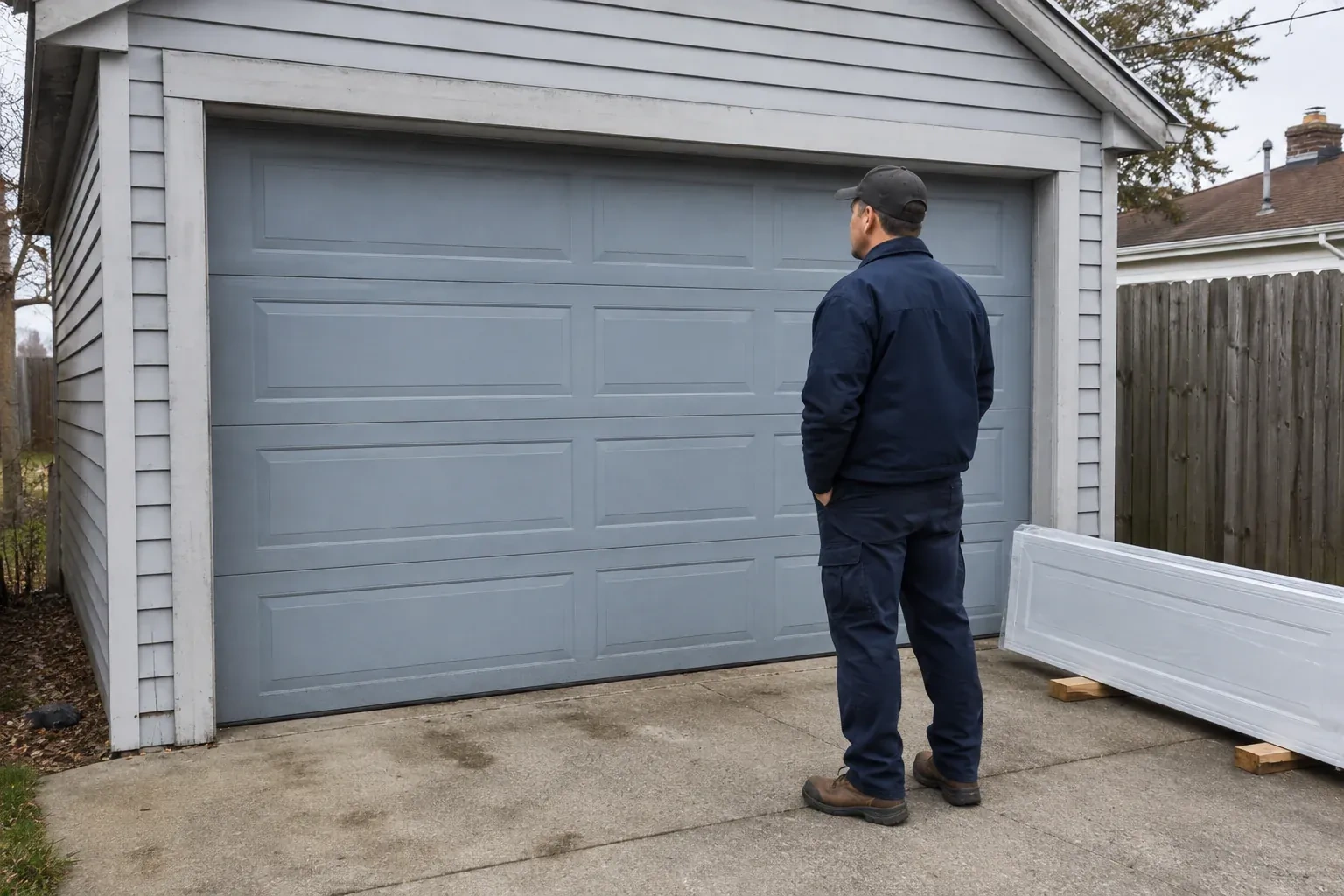
    A replacement panel leaves the door with continuous joints, secure hinges and reinforcement suited to the opening. Colour and surface texture may show normal differences between new and weathered material, while the functional check focuses on articulation, roller clearance and even contact at the seals. Washing the exterior with products allowed by the door manufacturer helps protect the finish. Future impact marks near an end stile or bottom fixture deserve early attention because these areas connect the panel to the guidance and lifting systems.

In the van

  • Bottom seal and retainer
  • Track brackets and back hangs
  • Lift cables and drums
  • Photoelectric sensors and sensing edges
  • Shafts and bearings

What shapes the quoteMount Nemo Door Specialists

Weather-seal work
Bottom rubber alone is different from a bent retainer, uneven landing, damaged perimeter seal or drainage issue that also needs correction at the opening.
Counterbalance components involved
Spring count, shaft arrangement, drum type, cable dimensions, bearings and bottom fixtures determine which tensioned parts must be controlled, replaced and reset together.
Corrosion and seized fasteners
Moisture and salt can affect cables, brackets, retainers, rollers and connections, broadening the repair when hardware cannot be removed or reused cleanly.

FeesSame any hour

Have it ready

Before you call · 0 / 3

(289) 203-0726

Answers in plain language

What causes a commercial sectional door to become noisy?

Common sources include roller-bearing wear, loose hinges, dry pivots, a rubbing panel, track movement, shaft-bearing wear and operator-chain vibration. The point in the cycle where the sound occurs helps isolate it. A technician watches and listens during controlled travel, looks for play or contact marks, and services the component creating the repeatable noise.

What if the door is stuck partly open?

The opening is kept clear and the door is stabilized in its current position before diagnosis. A cable may be displaced, a roller may have left the track, a spring may have failed or the operator may be holding the load. Support and controlled energy handling come before any attempt to move or dismantle the affected assembly.

Can the opening stay in use while work is underway?

The repair area needs controlled access while the door is supported, tensioned components are handled and operational tests are performed. Facilities can redirect pedestrians, forklifts and vehicles to another route and keep stored goods clear of the tracks and threshold. Once tools and supports are removed, the technician completes the agreed tests before returning the bay to normal traffic.

Centralinformation

HamiltonOntario

Town
Central, Hamilton
In business
12 years
Hours
Open 24/7
Nights, weekends and holidays, same fees
Visits
On-site assessment preferred. Request a visit or call.

2021 census: what it means at the door

Every square is one home in a hundred.

  • 61 in 100 homes · older homes
  • About 61% of homes in Hamilton were built in 1980 or earlier, according to the 2021 Census.Older houses frequently have a garage door that was replaced once already, sometimes with a door chosen for the opening rather than the building. When that door reaches its end, there is a chance to pick a style that suits the house properly, and we measure with that in mind.
  • Single-detached houses make up about 56% of homes in Hamilton (2021 Census).Mixed housing often means mixed access too: individual remotes and keypads on the houses, building fobs and shared gates on the condos. We program, clear and replace all of these, and keep property managers in the loop where a door serves more than one household.

Source: Statistics Canada, Census Profile

Open Central in Google Maps

On-site assessment

Request a visit.

Cold weather has exposed a widening gap below the closed door.

(289) 203-0726, open 24/7.