Sound familiar?Westdale
- The call
- You pulled the red cord to open the door during a power cut and it barely moved. Lifting it took your whole weight, and when you let go it came down hard. It used to float up with one hand.
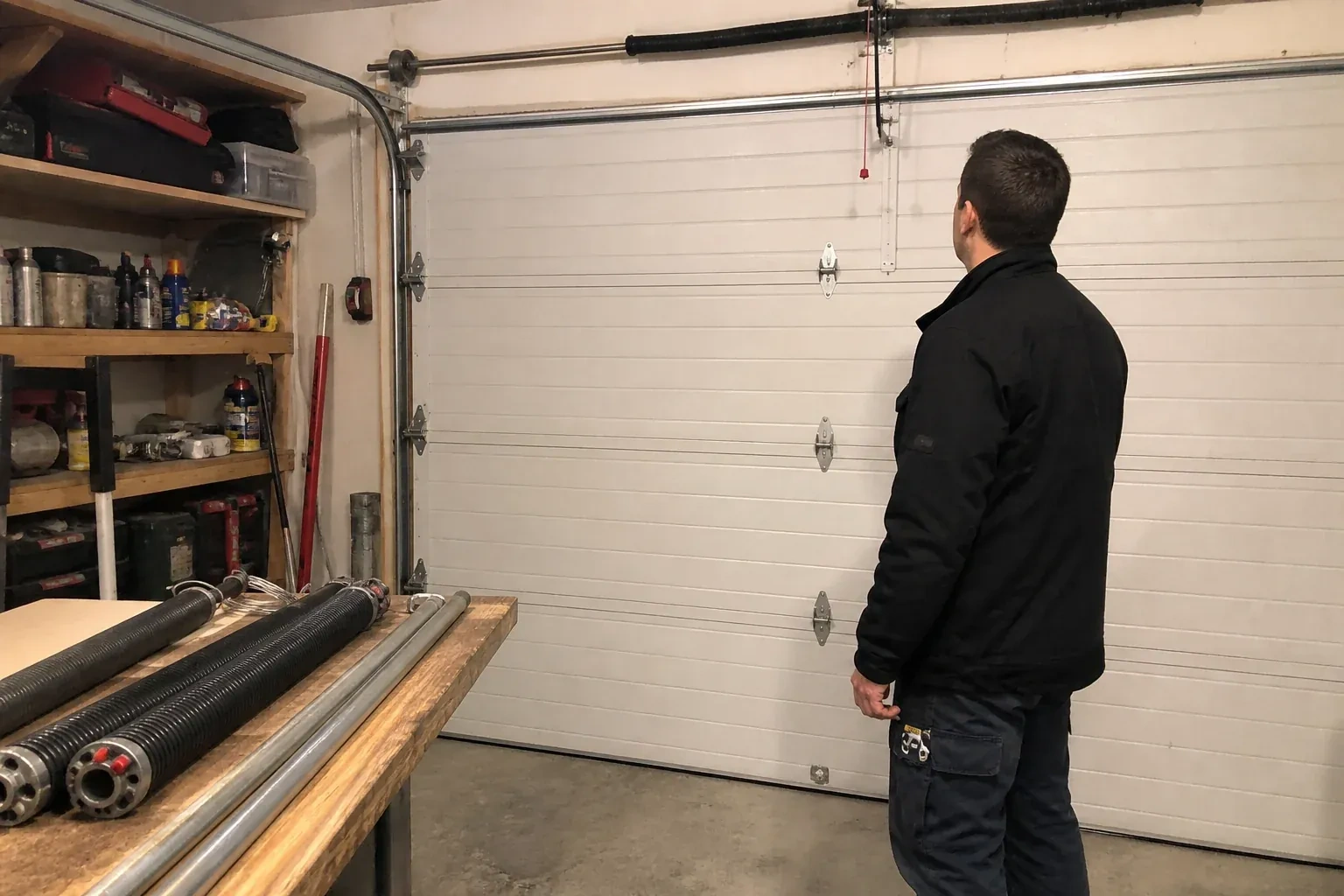
The opener groans on the way up and the door slams the last foot on the way down, hard enough to rattle the windows. The motor is the same one it always was; something in the springs has stopped doing its share.
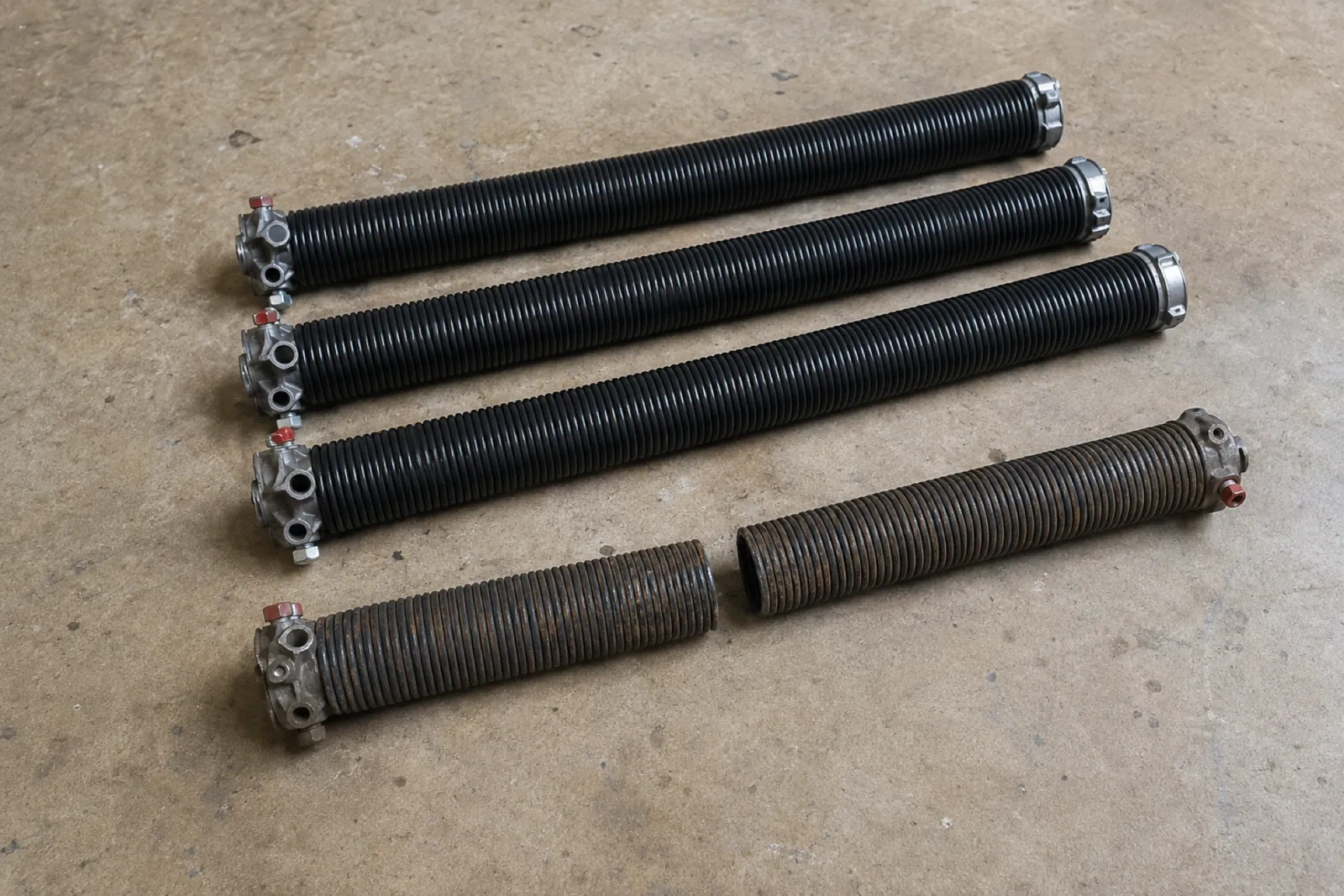
Extension springs are the two long coil springs that run beside the horizontal tracks of a garage door, one on each side. They stretch as the door closes and pull back as it opens, and that pull is what makes a heavy door feel light. Replacement puts a new, matched pair on the door. The technician opens and secures the door so the springs are slack, removes the old set, fits springs rated for the door's actual weight with containment cables through their centres, threads the lift cables over the pulleys, and adjusts both sides until the door balances. The opener is reconnected and tested last.
Sound familiar?Westdale
Extension Spring Replacement · Westdale
Scene 1
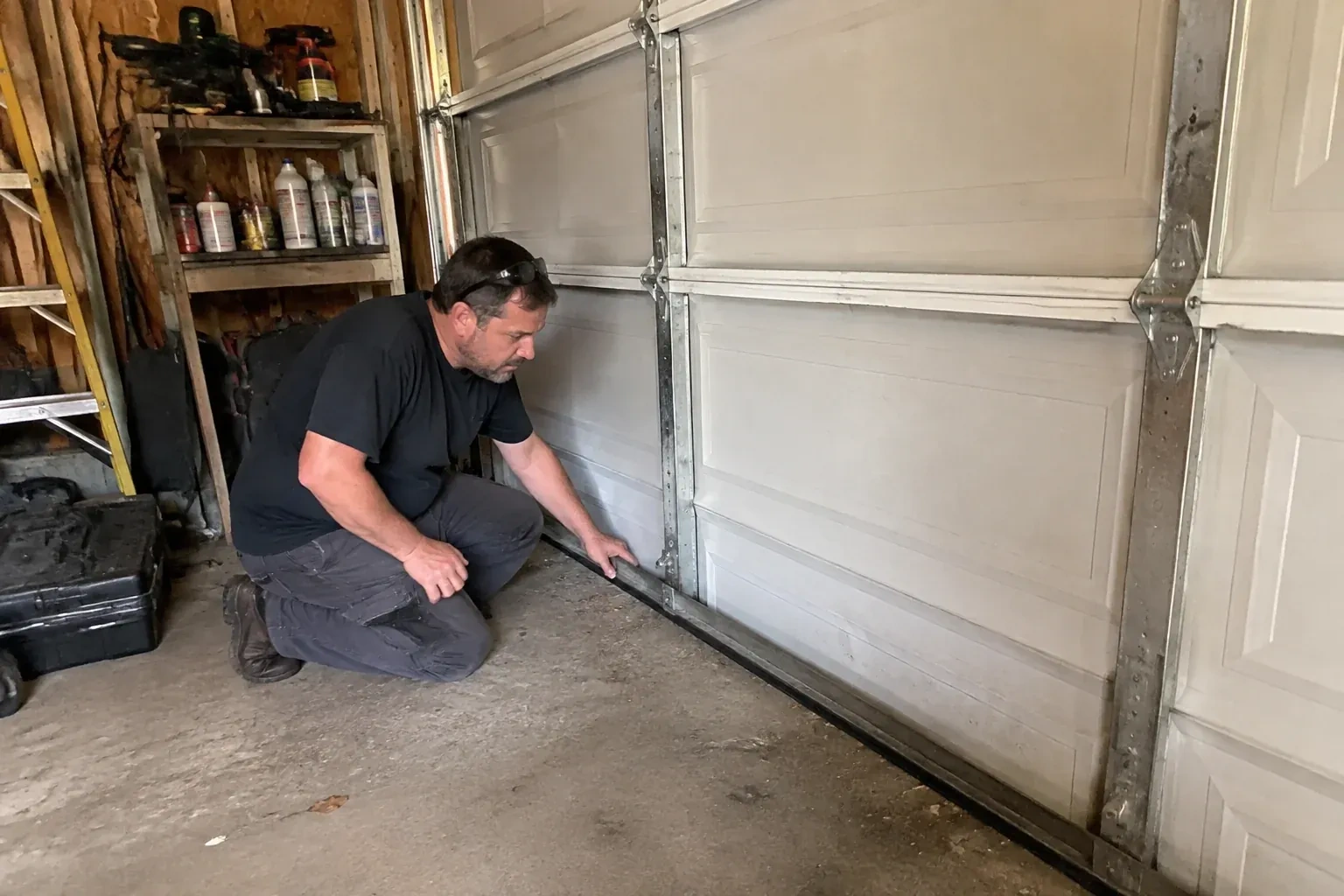
Extension springs pull against whatever holds their back end, usually an angle-iron hanger bolted to the rear track support or lag-screwed into a ceiling joist. The technician checks that this anchor is tight, that the lag screws bite into wood rather than drywall or a split joist, and that the hanger has not bent under years of load. The bracket that carries the fixed pulley at the front of the track is checked the same way, along with the bottom brackets on the door that the lift cables pull on. An anchor that has loosened lets the spring's geometry drift, which is one reason a door slowly becomes uneven.
Scene 2
Before a spring is hung, a containment cable is fed through the centre of its coil. One end is anchored at the rear, to the hanger or the framing behind it, and the other is run forward past the pulley and fixed to the bracket at the front of the track or to the wall, with enough slack that the cable never carries load while the spring works. The cable is checked to be clear of the pulley wheel and the lift cable so nothing rubs. Both sides are done the same way, whether or not the old installation had them. A spring that breaks in future is held on the cable rather than crossing the garage.
Scene 3
Two habits protect the new springs from the shocks that shorten a spring's life. The first is the floor: a door that comes down on a bin, a bike wheel or a ridge of packed snow stops short while the springs and cables are still pulling, and the jolt can throw a cable off its pulley. Keep the opening clear and scrape the ice ridge off the threshold before running the door in winter. The second is the opener's force setting. It was set for the newly balanced door; if the door ever seems to need more push, that is the springs asking for attention, not a reason to turn the force up.
What shapes the quoteMount Nemo Door Specialists
FeesSame any hour
Sometimes, and it is worth asking. A torsion system needs room above the door opening for its shaft and a header that can carry the spring bracket, which many older garages with a low ceiling simply lack; extension springs are there for that reason. Where the headroom exists, a conversion is a separate job with its own hardware and quote. The technician can tell you on the spot which route suits your garage.
Three things. Spray the springs, pulley axles and hinges with a garage-door lubricant twice a year, which slows rust in an unheated garage. Keep the threshold clear of bins and packed snow so the door never stops short with the springs still pulling. And leave the opener's force setting where the technician put it, since a door that starts needing more push is a balance question rather than a dial to turn.
No need, and it is easier on the door if you leave it. With a spring broken or slack, the door is unbalanced and heavy, and lifting it can let it drop or twist a section in the track. If the door is stuck partway, leave it there and keep people and the car away from the opening. The technician brings clamps and props, and the door is secured before it is moved at all.
HamiltonOntario
Extension Spring Replacement · Hamilton, Buchanan, Central, Chedoke Park, Cootes Paradise, Corktown, Hamilton Beach, Hopkins Court, Hopkins Survey, McDonald Court, North End, University Gardens, Waterdown, West Hamilton, Pleasant View Survey
Every square is one home in a hundred.
On-site assessment
The opener groans on the way up and the door slams the last foot on the way down, hard enough to rattle the windows.
(289) 203-0726, open 24/7.
On-site assessment preferred · (289) 203-0726, open 24/7