Skip to content
MountNemo Door SpecialistsOpen 24/7 (289) 203-0726
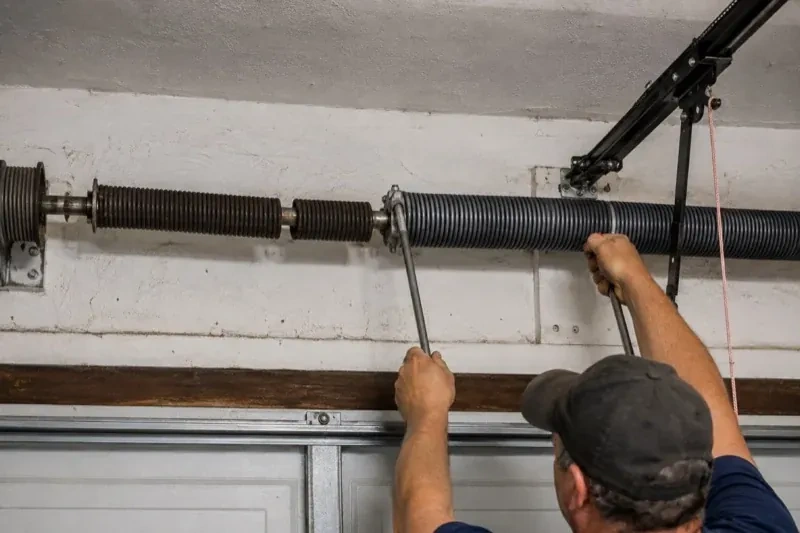
Person holding metal bars beside exposed coiled springs above a garage door. — Torsion Spring Replacement, Hopkins Survey

Springs · Hopkins Survey

Torsion Spring Replacement

The door drops the last stretch to the floor rather than settling, and when you stop it halfway by hand it slides down instead of staying put. Balance has drifted, and the spring is no longer holding its share of the weight.

In plain words

On a door with two springs, replacement usually starts with a conversation about scope. Both springs have completed the same number of cycles, so when one breaks the other is typically close behind, and replacing the pair together gives the door two matched springs sharing the load evenly. The technician explains what the installed system is, how each spring is loaded and what the door's weight calls for, then fits and winds the springs as a set. The result is a balanced door with a fresh cycle life on both sides rather than a repair that may be repeated soon.

Sound familiar?Hopkins Survey

The call
Nothing broke outright, but the door has grown heavier each winter, opens more slowly and squeals as it moves. The springs on an older door have lost tension and the coils show pitting, so the system is asking for attention before it fails.
NextHow the visit goes

Torsion Spring Replacement · Hopkins Survey

How the visit goes

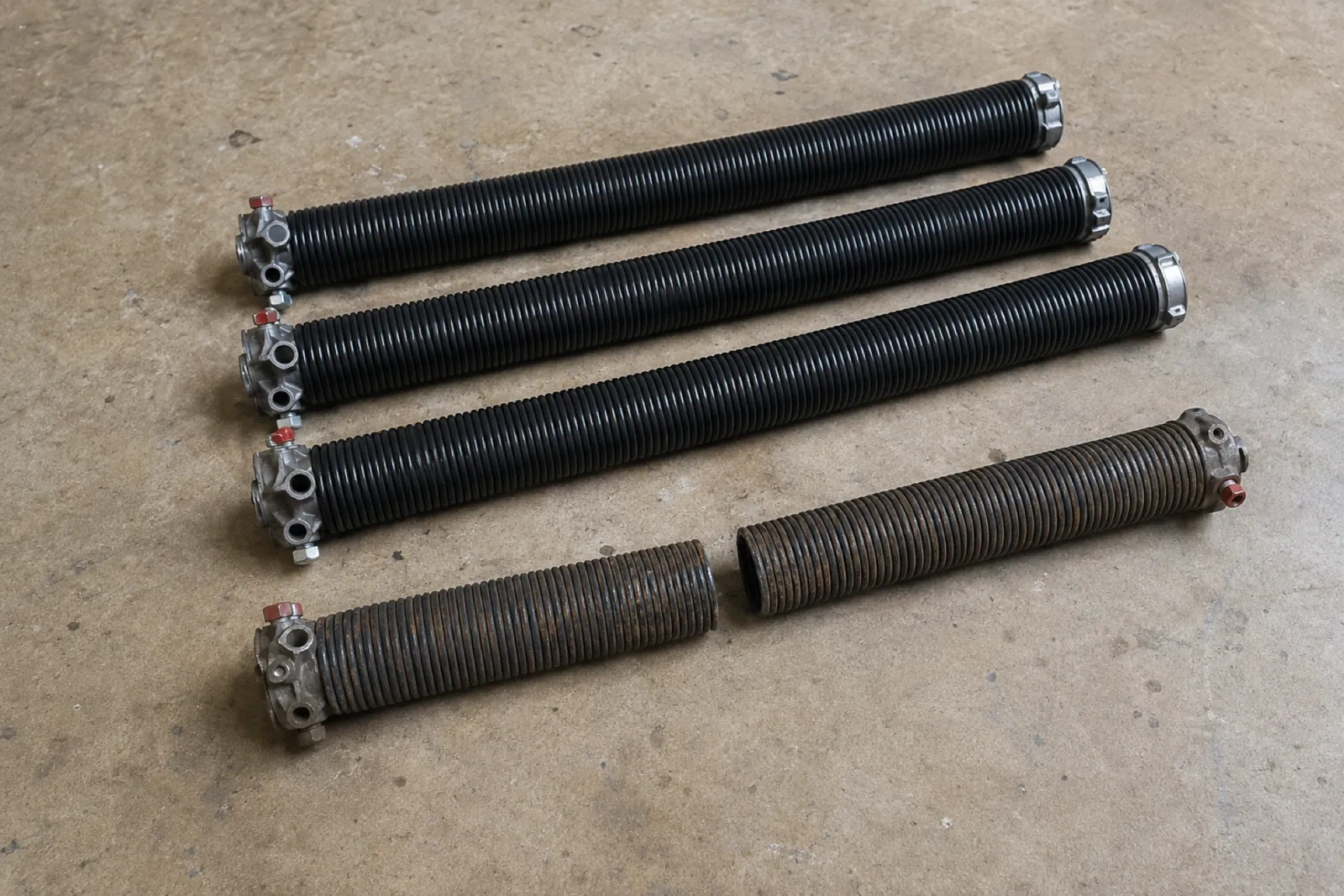
Four long coiled garage-door springs on a concrete floor, three black with metal end cones and one rusty spring broken in two. — Hopkins Survey
  1. Scene 1

    Confirming the system layout

    Doors are set up in several ways, and the replacement has to match. The technician notes whether there is one spring or two, whether the shaft is a single piece or two halves joined by a coupler, and what the shaft diameter is. Drum type is read from the drums themselves: standard-lift drums for a normal ceiling, high-lift or vertical-lift drums where the door rises well above the opening, or a rear-mounted assembly in a low-headroom garage. Track radius and headroom are measured because they change how many turns the spring needs and which drums it must work with.

  2. Scene 2

    Renewing the bearings while the shaft is out

    Removing a spring frees the shaft, which is the moment to deal with bearings. The centre bearing, which sits in the bracket between the springs and carries the shaft under constant load, is pressed out and replaced if it grinds or has play. End bearings in the plates at each side are checked the same way. New bearings are seated square, and the shaft is slid back through them and turned by hand to confirm smooth rotation before any spring is wound. Smooth bearings reduce the effort the spring and opener have to overcome, which extends the life of both.

  3. Scene 3

    Relief for the opener

    Your opener benefits as much as the door. With the spring carrying the weight again, the motor, gear drive, trolley and rail return to the light duty they were designed for, which tends to mean a longer working life and less noise. Force settings have been reset to suit a balanced door, so the safety reversal reacts to a genuine obstruction rather than to a heavy door. Once a year, repeat the simple reversal test by placing a length of wood flat on the floor in the door's path and confirming the door reverses on contact. The opener's photo-eye sensors deserve a wipe at the same time.

In the van

  • End bearing plates
  • Wire gauge and tape measure
  • Torsion springs, oil-tempered or galvanized
  • Locking pliers for the track
  • Socket set and wrenches

What shapes the quoteMount Nemo Door Specialists

Door size and weight
A double-width door, a solid wood door or a thick insulated door weighs far more than a single-width steel panel, calling for heavier wire, longer coils or more springs to balance it.
Oversize or non-standard doors
Very wide doors, tall doors, carriage-house doors with heavy overlays and light-commercial doors may need duplex springs, multiple springs or larger drums, which changes both the hardware and the method.
Converting from extension springs
Moving a door from extension springs to a torsion system adds a shaft, bearings, drums and brackets, and removes the old pulleys, which is a broader job than replacing an existing torsion spring.

FeesSame any hour

Have it ready

Before you call · 0 / 3

(289) 203-0726

Answers in plain language

Can I keep using the opener until the technician arrives?

The kindest thing for the door is to leave it where it is and use another entrance. An opener is designed to move a door the springs have already made light; asking it to lift a full-weight door strains the trolley and gear drive and can crease the top section. Keeping the door still and clear of people until the spring is replaced protects the rest of the system from extra repairs.

Why is my door sitting crooked since the spring broke?

On a two-spring door, one intact spring keeps pulling on its side while the broken side goes slack, so the door lifts unevenly and a cable can jump its drum. The technician levels the door, reseats the cables in their drum grooves and evens the tension after the new spring is fitted. Rollers and track are checked for damage from the crooked travel so the door runs square again.

Why does the door need to be balanced, and how is that tested?

Balance means the spring is holding almost exactly the door's weight, so the door neither flies up nor slams down and the opener only guides it. It is tested by releasing the opener, lifting the door to about waist height and letting go: a balanced door stays there. The technician fine-tunes in quarter turns of the spring until the door holds at several heights and travels evenly on both sides.

Hopkins Surveyinformation

HamiltonOntario

Town
Hopkins Survey, Hamilton
In business
12 years
Hours
Open 24/7
Nights, weekends and holidays, same fees
Visits
On-site assessment preferred. Request a visit or call.

2021 census: what it means at the door

Every square is one home in a hundred.

  • 61 in 100 homes · older homes
  • About 61% of homes in Hamilton were built in 1980 or earlier, according to the 2021 Census.Where most houses were built a generation or more ago, a good share of garage doors are still the originals: wood or early steel sections on extension springs. Those doors respond well to fresh pulleys, safety cables and a careful balance, and the technician carries the parts for them.
  • Single-detached houses make up about 56% of homes in Hamilton (2021 Census).Where housing is varied, security needs vary too. A detached home wants its garage door closing fully and its interior door respected; a townhouse or condo wants old fobs and remotes cleared and the shared entrance working. We address whichever applies at each door.

Source: Statistics Canada, Census Profile

Open Hopkins Survey in Google Maps

On-site assessment

Request a visit.

The door drops the last stretch to the floor rather than settling, and when you stop it halfway by hand it slides down instead of staying put.

(289) 203-0726, open 24/7.