Skip to content
MountNemo Door SpecialistsOpen 24/7 (289) 203-0726
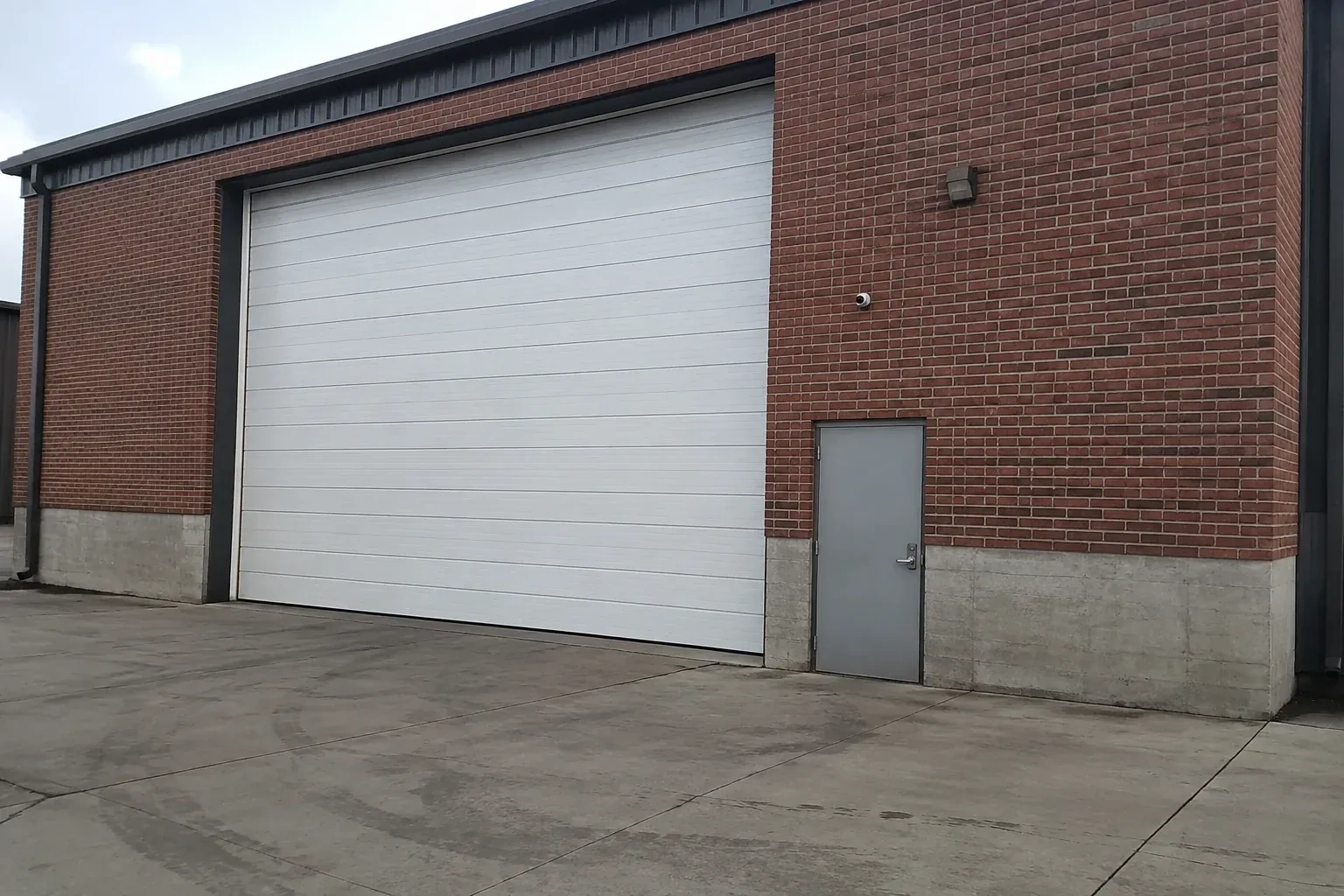
Tall closed sectional loading door beside a personnel door at a brick unit. — Commercial Sectional Door Repair, Pleasant View Survey

New Doors · Pleasant View Survey

Commercial Sectional Door Repair

Cold weather has exposed a widening gap below the closed door. The bottom retainer is bent, the rubber seal is split, and uneven seating lets drafts and slush enter the work area.

In plain words

High-lift and vertical-lift doors need repair methods suited to their track geometry. Cable tension, drum selection, shaft condition, track support and the transition from vertical travel all affect whether the sections remain controlled. The technician records the configuration before disassembly, supports the door at a stable position and matches replacement components to the door weight and lift arrangement. After reassembly, level travel and cable seating are observed at several positions rather than judged only with the door closed.

Sound familiar?Pleasant View Survey

The call
A high-lift door begins smoothly, then a cable loses tension as the top sections change direction. The loose cable no longer follows its drum grooves evenly, leaving the door unreliable at the top of travel.
NextHow the visit goes

Commercial Sectional Door Repair · Pleasant View Survey

How the visit goes

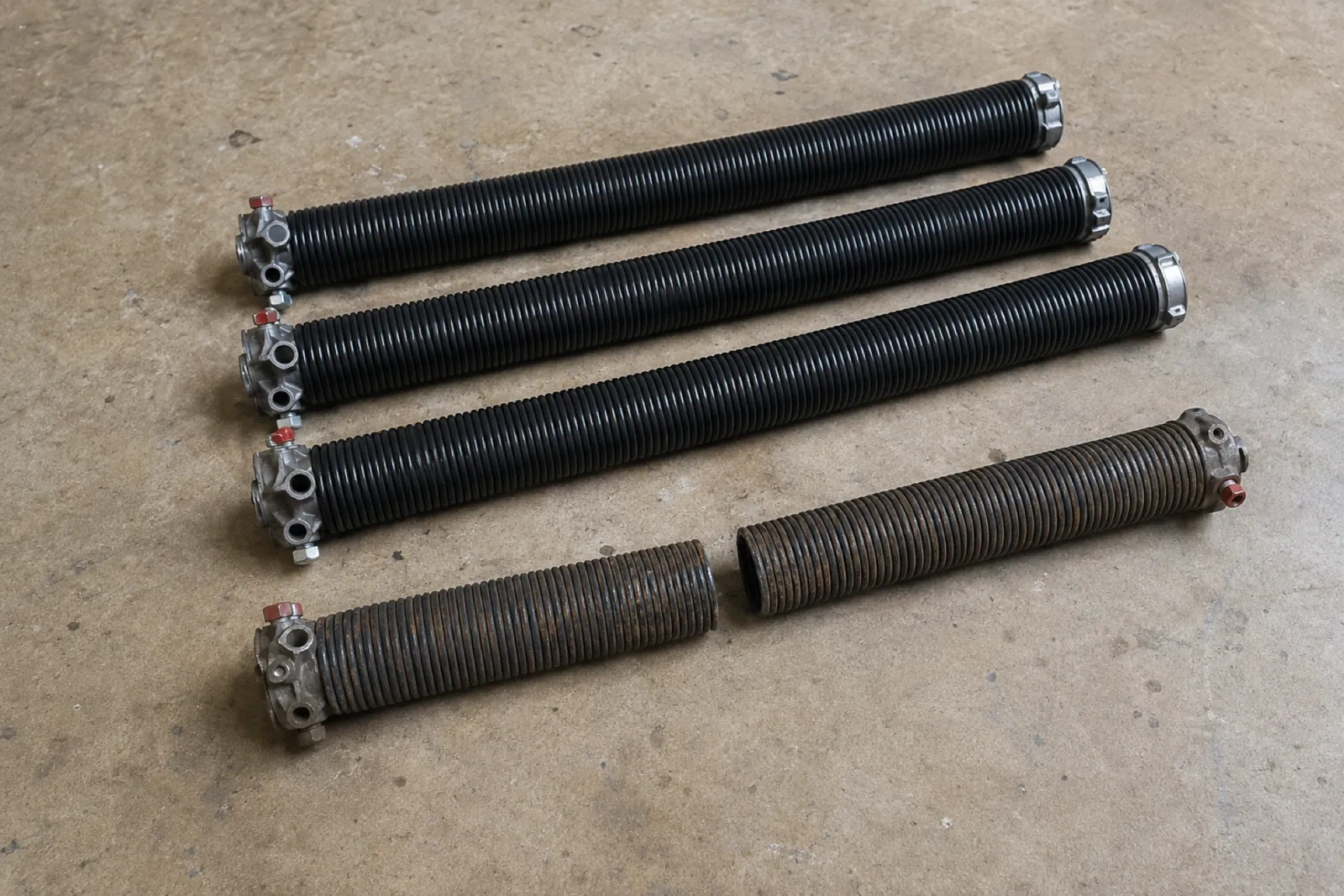
Four long coiled garage-door springs on a concrete floor, three black with metal end cones and one rusty spring broken in two. — Pleasant View Survey
  1. Scene 1

    Reading an uneven door

    A crooked bottom edge leads to a side-by-side comparison. Cable condition and length, drum grooves, shaft position, bearing movement and bottom fixtures are viewed together. The technician notes whether one cable is slack, crossed or frayed and whether a roller has left its normal track position. Measurements at the tracks show if the guides remain parallel and plumb. The door is then secured so its weight cannot deepen the imbalance during inspection. These findings reveal whether the repair belongs in the lifting system, track alignment or impact-damaged hardware.

  2. Scene 2

    Completing a system-wide test

    After tools and supports are cleared, the technician observes the repaired assembly through its entire range. Manual balance is evaluated where the design permits, followed by powered cycles that show cable tracking, roller travel, section alignment and final seating. The operator's stop and reverse responses are checked with its installed protective devices. Unusual vibration, contact marks and loose connections receive a final review. The service record identifies parts fitted, adjustments made, test results and any separate maintenance items the facility may wish to schedule.

  3. Scene 3

    Level movement through the opening

    After cable, spring or track work, the door should rise with its bottom edge level and move without a side lag. Facility staff can watch the first few routine cycles from a clear position and note whether both cables remain neatly seated on their drums. A new tilt, rubbing sound or loose strand is useful information to report before the opening sees heavier traffic. Keeping pallets and vehicles outside the marked travel zone also protects the restored alignment and gives operators a clear view of the complete door path.

In the van

  • Bottom seal and retainer
  • Track brackets and back hangs
  • Lift cables and drums
  • Photoelectric sensors and sensing edges
  • Shafts and bearings

What shapes the quoteMount Nemo Door Specialists

Door size and moving weight
Opening dimensions, panel construction, reinforcement and overall door weight determine component ratings, handling methods and how much support is required during the repair.
Protective device condition
Misaligned photoelectric sensors may need adjustment, while damaged wiring, sensing edges, brackets or control modules require compatible components and additional function testing.
Number of affected openings
A single bay with one defined fault differs from a facility request covering several numbered doors, separate symptoms and individual operational tests.

FeesSame any hour

Have it ready

Before you call · 0 / 3

(289) 203-0726

Answers in plain language

What causes a commercial sectional door to become noisy?

Common sources include roller-bearing wear, loose hinges, dry pivots, a rubbing panel, track movement, shaft-bearing wear and operator-chain vibration. The point in the cycle where the sound occurs helps isolate it. A technician watches and listens during controlled travel, looks for play or contact marks, and services the component creating the repeatable noise.

What if the door is stuck partly open?

The opening is kept clear and the door is stabilized in its current position before diagnosis. A cable may be displaced, a roller may have left the track, a spring may have failed or the operator may be holding the load. Support and controlled energy handling come before any attempt to move or dismantle the affected assembly.

Can the opening stay in use while work is underway?

The repair area needs controlled access while the door is supported, tensioned components are handled and operational tests are performed. Facilities can redirect pedestrians, forklifts and vehicles to another route and keep stored goods clear of the tracks and threshold. Once tools and supports are removed, the technician completes the agreed tests before returning the bay to normal traffic.

Pleasant View Surveyinformation

HamiltonOntario

Town
Pleasant View Survey, Hamilton
In business
12 years
Hours
Open 24/7
Nights, weekends and holidays, same fees
Visits
On-site assessment preferred. Request a visit or call.

2021 census: what it means at the door

Every square is one home in a hundred.

  • 61 in 100 homes · older homes
  • About 61% of homes in Hamilton were built in 1980 or earlier, according to the 2021 Census.In a mature neighbourhood the garage door is often the single largest feature of the front elevation, so keeping the original look matters. Modern insulated doors come in raised-panel and carriage styles that echo the older designs while running on today's torsion hardware.
  • Single-detached houses make up about 56% of homes in Hamilton (2021 Census).In a neighbourhood with both detached and attached homes, some customers decide alone and others report to a board or property manager. We adapt the visit accordingly, giving a homeowner options at the door and a manager a written summary they can circulate.

Source: Statistics Canada, Census Profile

Open Pleasant View Survey in Google Maps

On-site assessment

Request a visit.

Cold weather has exposed a widening gap below the closed door.

(289) 203-0726, open 24/7.