Sound familiar?Pleasant View Survey
- The call
- The outdoor keypad worked all summer. Now that the mornings are below freezing it lights up faintly, takes the code, and the door does nothing. Back inside, the remote works on the first press.
Someone in the family tried to add a remote, held the button on the ceiling unit a little too long, and now every remote in the house is dead at once. The wall control still moves the door.
Most remotes that refuse to pair were never going to. Garage door openers have gone through several radio generations since the mid-1990s, and a remote made for one generation is invisible to a receiver from another. The learn button on the head unit, its colour on many makes, and the model label tell the technician which generation you have. The right remote or keypad is chosen from the maker's compatibility chart before any packaging is opened, or a universal control that speaks several generations is used. Programming then takes a moment, because the two sides can finally hear each other.
Sound familiar?Pleasant View Survey
Garage Door Remote and Keypad Programming · Pleasant View Survey
Scene 1
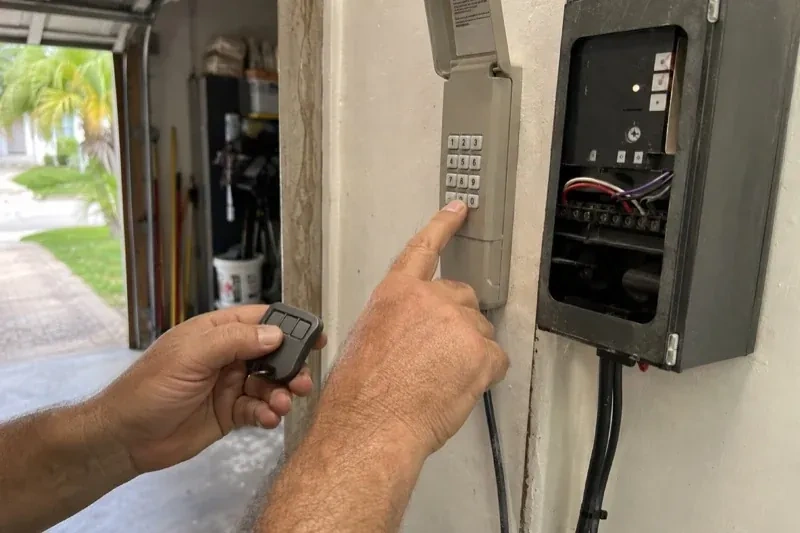
An outdoor keypad gets its own look. The technician checks whether it lights when pressed, whether the door responds to the existing code from close by, and what condition the buttons, slide cover and battery compartment are in after years of weather. A keypad that accepts a code but does not move the door may be unpaired, low on cells, or hearing interference. A code nobody remembers is not a dead end: the keypad can be reset and given a new code during programming. The mounting height and sight line to the door are noted, since a keypad should sit out of children's reach and where the door can be seen.
Scene 2
A vehicle's built-in garage button often learns in two stages on rolling-code openers. First the car learns the remote: with the handheld remote carrying a fresh cell held close to the mirror or console, the vehicle button and the remote button are pressed together until the indicator changes. Second, the opener learns the car: the technician presses the head unit's learn button and returns to the vehicle inside the window that follows to press the trained button until the door moves. Some vehicle systems follow a different sequence with no handheld remote, so the vehicle and opener instructions are checked first. Where an older in-car system cannot hear a newer opener, a small bridge module is added.
Scene 3
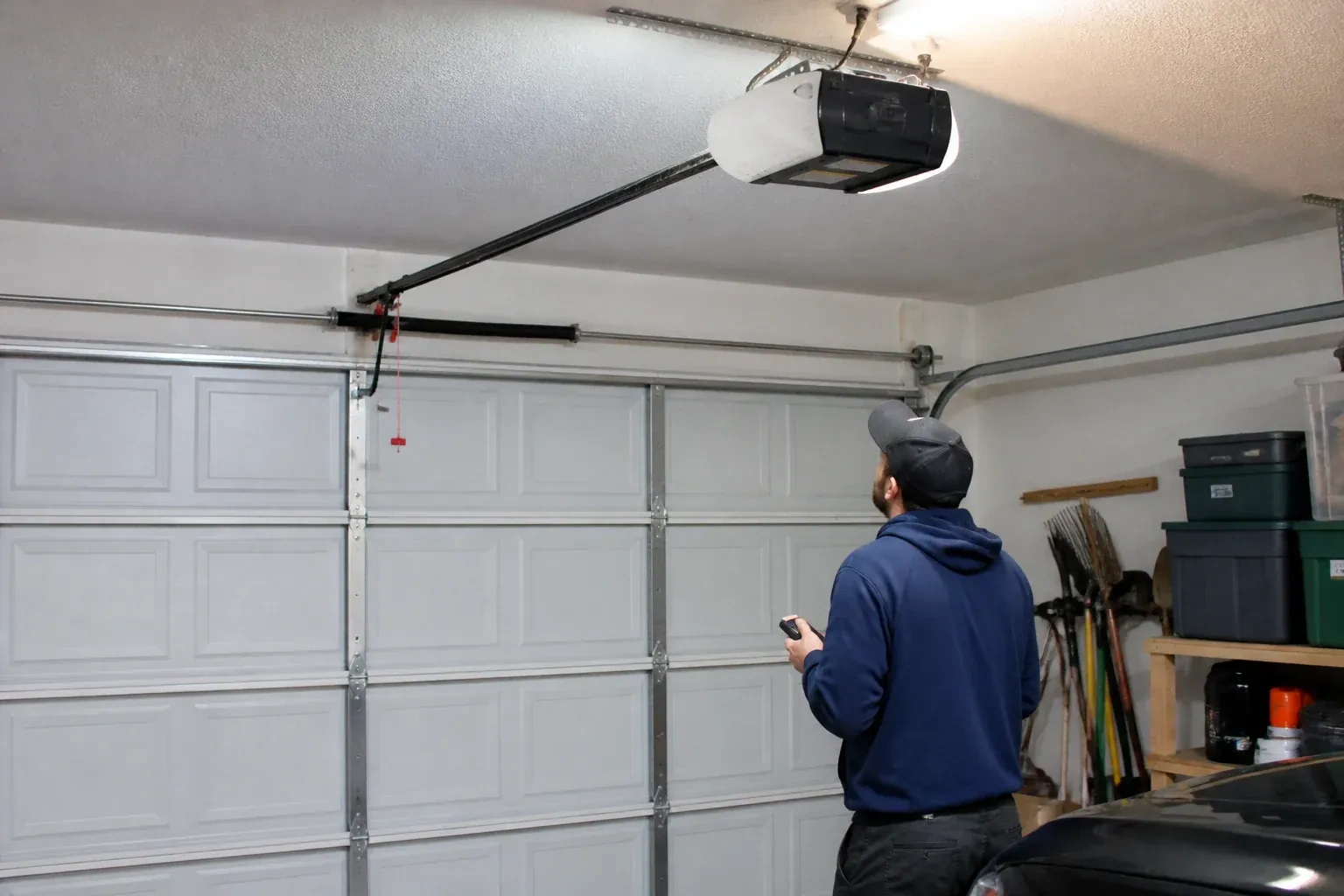
Because you watched the pairing, you know where the learn button lives under the light cover, what a short press does and, just as importantly, your opener's own erase sequence. Confusing the two is the cause of many surprise lockouts. You have the compatibility details for your opener written down, so the next remote you buy is the right generation, and you know that unplugging the opener during a long absence does not erase anything. Most households can add a remote themselves after seeing it once.
What shapes the quoteMount Nemo Door Specialists
FeesSame any hour
Short range is a signal problem, not a pairing problem. LED bulbs in the opener's own sockets can emit radio noise that swamps the receiver, an antenna wire tucked into the housing cannot hear well, and a coin cell near the end of its life transmits weakly before it dies. Swapping the bulb, letting the antenna hang free and fitting a fresh cell usually restore range; if not, the receiver is checked.
You choose it at programming time: four digits on many keypads, three to eight on others. Avoid the house number, a birth year or a repeated digit. The code is entered into the keypad, confirmed at the opener, and kept off the paperwork. Changing it later follows the instructions for your model and takes a couple of minutes, and the technician can show you the sequence before leaving.
Often in two steps, on a common HomeLink-style setup. First the car learns a working handheld remote: hold the remote close to the mirror or console and press its button together with the vehicle button until the indicator changes. Then the opener learns the car: press learn on the head unit, walk back to the car within the window that follows, and press the trained button repeatedly until the door responds. Some vehicle systems use a different sequence with no handheld remote, so the vehicle manual is checked first.
HamiltonOntario
Garage Door Remote and Keypad Programming · Hamilton, Buchanan, Central, Chedoke Park, Cootes Paradise, Corktown, Hamilton Beach, Hopkins Court, Hopkins Survey, McDonald Court, North End, University Gardens, Waterdown, West Hamilton, Westdale
Every square is one home in a hundred.
On-site assessment
Someone in the family tried to add a remote, held the button on the ceiling unit a little too long, and now every remote in the house is dead at once.
(289) 203-0726, open 24/7.
On-site assessment preferred · (289) 203-0726, open 24/7